

How UX directly impacts P&L
UX isn’t decoration; it is the mechanism that converts product value into business revenue.
As a C-level executive at two consecutive VC-backed startups (ARxVision, AdInMo) and Senior Manager at major players like Ubisoft and the BBC, I’ve utilized design to solve critical P&L issues. The hardest part has often been building the business case to convince decision-makers to invest in user experience. Here are two distinct examples where UX was directly tied to business success.
In some cases, early-adopters, adventurers who need your product so much that they’ll be willing to go through a bad user experience to access the value a product delivers. This is usually a positive because the fact that a user is willing to go through a painful UX signals that the solution solves their problem well-enough. When this is the case, improving the UX will increase the efficiency of the solution (reducing friction) and increase customer satisfaction. So in this context UX is a growth tool.
In other cases bad UX can truly be a barrier to adoption, it totally comes in the way and blocks users from benefiting from any of the value a product aims to deliver. Don Norman calls this The Gulf of execution: the difference between what a user wants to do with a product and how the product allows them to do it. If the gap is too big, the user stops trying and the product fails, the business fails.
“Two of the most important characteristics of good design are discoverability and understanding.” — The Design of Everyday Things, Don Norman
UX can make or break the business. Here are two illustrations of this statement from my own experience. The first example is an extreme case because it is an accessibility wearable for people with disabilities, so UX matters more than ever. The second example is more subtle because it targets Unity developers and we assume they are technical, and therefore might not care about or need a premium UX.
ARxVision — Making the world accessible with AI
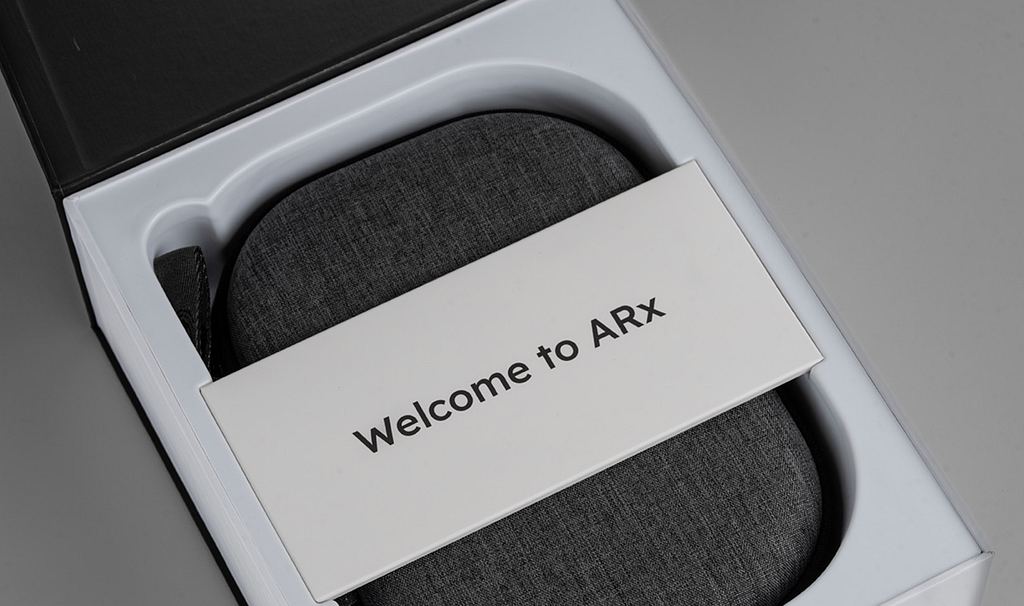
- Context: I led a VC-owned company who launched a wearable device for individuals with blindness. We launched an early private beta as we wanted to learn from users and not build in a silo. This was entirely a case of provoking problems to measure their importance.
- Challenge: The learning from multiple beta launches, was that UX problems were directly threatening the business. Bad onboarding often resulted in a product return, directly harming the P&L. I also observed that most competitors were charging high prices to make-up for in-person expensive training, my view was always that if a product is designed well enough, in-person training shouldn’t be required.
- Action: I designed an interactive unboxing and onboarding experience simulating in-person training thanks to a generative AI powered experience.
- Result: The onboarding drastically reduced returns and support tickets, but also enabled our customers and ourselves to capture more value than our competitors who were way more expensive because they were still relying on middle men in-person sales and training to make up for bad UX, when our users 17 to 88 were able to get set up in minutes thanks to our design (and how Sales, Product, Engineering, and Design beautifully joined forces to deliver that experience).
AdInMo — In-Game ads SDK that monetise without interrupting the game.
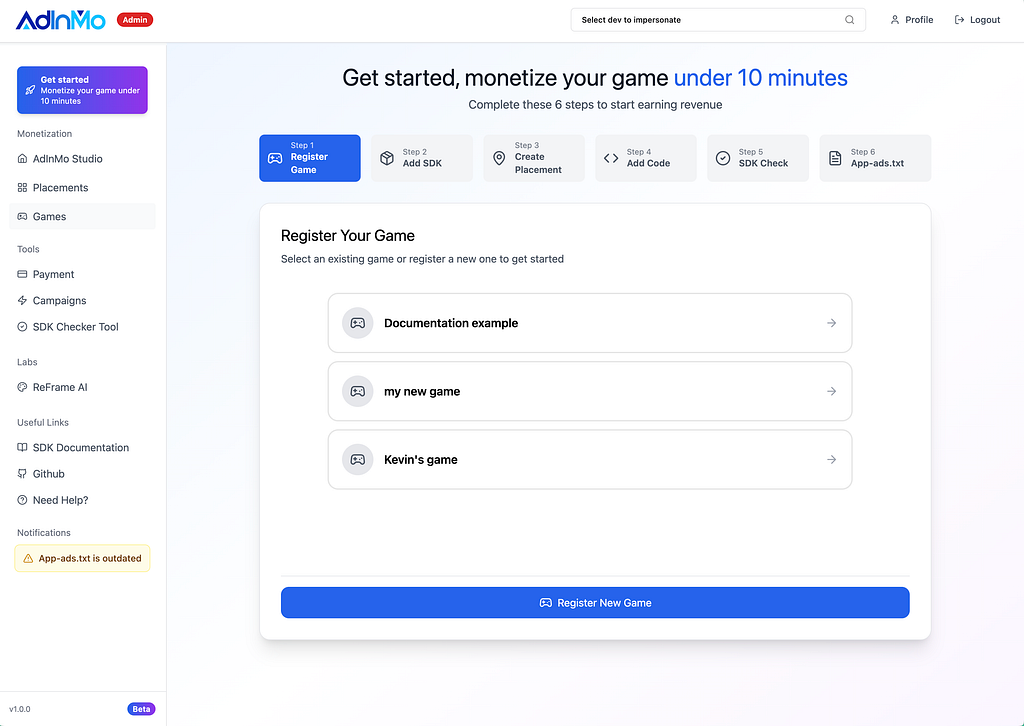
- Context: I led product and design in a company building an in-game Ad SDK for mobile game Unity Developers.
- Challenge: The SDK was live in a number of games and worked well, but new features increased complexity, resulting in broken integrations, or cancelled integrations. Broken integrations generated misleading data, misleading our company direction. Cancelled integrations were revenue losses — both affecting the P&L.
- Action: My team tackled this problem by designing an end-to-end onboarding flow and interactive tools to provide live feedback, certainty, and reduced overheads for our customers.
- Result: The redesigned code interface and onboarding flow for the SDK meant an integration could be completed in 10mn, we became better at tracking drop off points and best of all, we started recording developers self-serving and integrating the SDK without the sales team getting involved, building a new engine of growth for the company.
These 2 examples show how when strategically used, design can directly impact a company’s success. In both examples, I did not over invest in design initially in order to identify the pain points before addressing them, but I was carefully watching users and ‘waiting around the corner’ for problems, almost provoking them to measure their importance. If I wasn’t ‘looking’ for these problems, my team and I could have missed opportunities to fix them, or even worse, fixed something that didn’t need to be fixed.
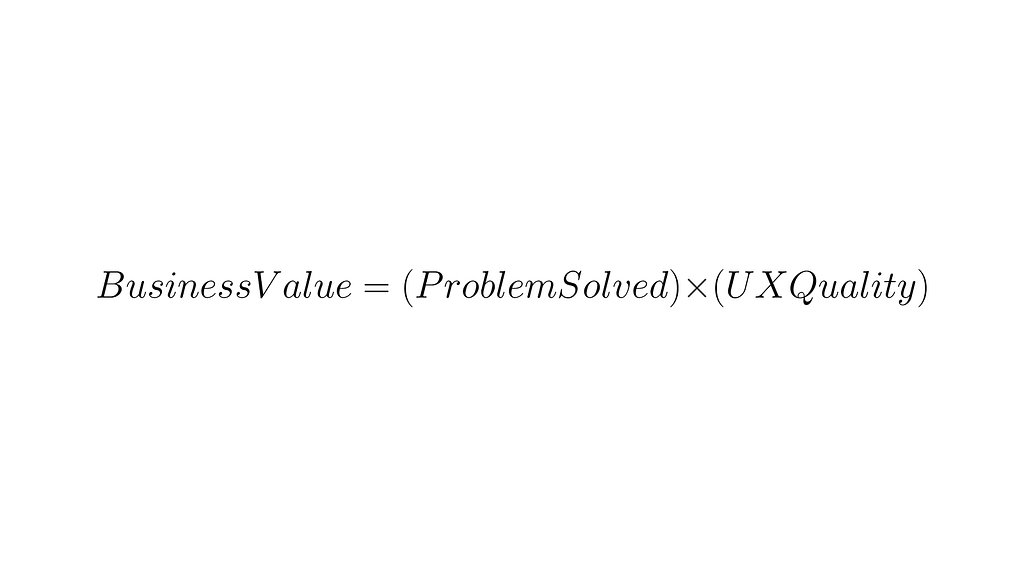
The quality of a solution is a product of how well we understand the problem it solves and for whom — all of which falls within the scope of design. Ultimately, this means Design is not just about aesthetics; it is the strategic intelligence that maximises Business Value.
In both cases, I didn’t over-invest in “pixel perfection” initially. I used a lean approach — waiting to see where users struggled to access value — and then deployed design strategically to remove those specific barriers.
McKinsey data backs this approach, showing that companies who treat design as a cross-functional business lever (not just a studio) see 32% higher revenue growth than their peers.
Real UX isn’t just about making things easy (or pretty); it’s about making the business viable.
📚 Further Reading & References
For those interested in the data and theory behind these concepts, here are the foundational resources referenced in this article:
- The Business Value of Design (McKinsey & Company): The definitive report analysing 300 companies over five years, proving that top-quartile design scorers increase revenues and shareholder returns at nearly twice the rate of their industry peers. Read the full report here.
- The Gulf of Execution (Nielsen Norman Group): A deeper dive into Don Norman’s framework on why users fail to interact with products. Read the summary here.
- Product-Led Growth (OpenView): If you are interested in how companies like Stripe and Duolingo use product experience as their primary growth engine, OpenView’s guide is the industry standard. Read the guide.

How UX directly impacts P&L was originally published in UX Collective on Medium, where people are continuing the conversation by highlighting and responding to this story.
This post first appeared on Read More