
I Tried ByteByteGo, NeetCode, and Educative: Here’s Which One Actually Delivers for System Design Interviews
I tried ByteByteGo, NeetCode and Educative, here is my recommendation for System design interviews in 2026
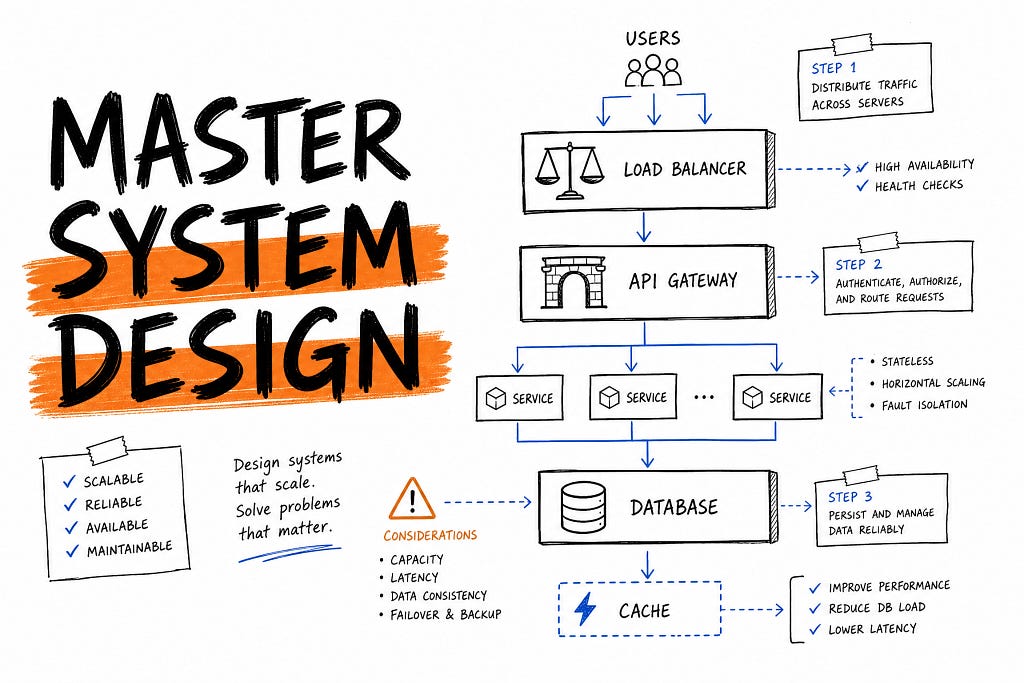
System design interviews broke me.
Not in a philosophical way. In a practical, “I just failed three mock interviews” way.
I could code circles around the interviewer. Data structures? No problem. Algorithms? Solved 500+ LeetCode problems. But ask me to design YouTube, and I’d freeze.
The problem wasn’t my ability. It was that I’d never seen large-scale systems designed. I didn’t know how to think about consistency vs availability, sharding strategies, or when to cache vs when to query directly.
So I decided to fix it systematically. I tested three of the most popular system design resources: ByteByteGo, NeetCode, and Educative’s Grokking System Design.
- System Design · Coding · Behavioral · Machine Learning Interviews
- Grokking System Design Interview: Patterns & Mock Interviews
I went through each one. Completed courses, worked through problems, tracked what clicked and what didn’t.
Here’s what I found.
The Problem with System Design Preparation
Before revealing my findings, let me explain why system design is so hard to prepare for.
Unlike coding interviews:
- There’s no “right answer”
- You’re not testing a single skill
- You need knowledge across multiple domains (databases, networking, architecture)
- You’ve probably never designed something at million-user scale
- Most courses are either too shallow or too deep
This creates a gap: You know coding, but you don’t know how to think about scale.
That’s where these courses come in. But not all are equal.
Platform 1: ByteByteGo — The Visual Powerhouse
ByteByteGo, created by Alex Xu (author of “System Design Interview — An Insider’s Guide”), is fundamentally different from other platforms.
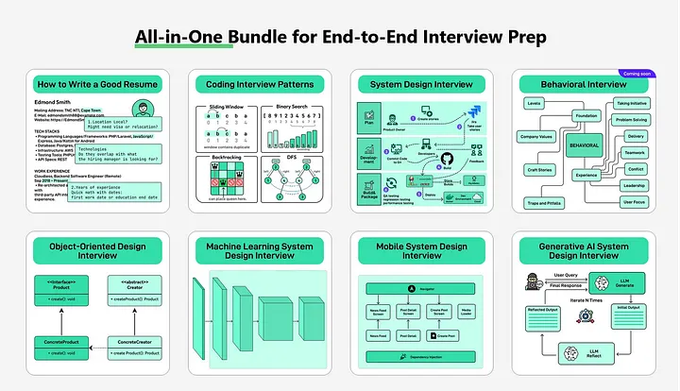
It’s visual-first. Everything is explained through diagrams, flowcharts, step-by-step illustrations.
What I Actually Experienced?
The Good:
- Diagrams are genuinely excellent. Complex topics become visual and digestible
- Course covers everything: standard system design, OOP design, ML system design, Generative AI design, coding patterns
- Content is constantly updated (I saw new material on GenAI systems added mid-course)
- Problems progress logically (start simple, build complexity)
- Community is active with mock interview opportunities
The Challenging:
- Subscription cost (though currently 50% off, so ~$60/year)
- Focuses on breadth of systems rather than going deep into internals
- If you prefer reading explanations, the visual-first approach might feel limiting
When ByteByteGo is Perfect?
For: Visual learners, mid-senior engineers, people preparing for FAANG Not ideal if: You want extreme depth into database internals or prefer text-based learning
My verdict: If you can only pick one resource, pick this. The visuals alone accelerate your understanding significantly.
Here is the link to Join — ByteByteGo with 50% OFF NOW
Platform 2: NeetCode — The Beginner’s Gateway
NeetCode has become surprisingly popular for system design, especially among beginners.
What I Actually Experienced
The Good:
- Simple, conversational explanations
- Beginner-friendly (doesn’t assume you know distributed systems)
- Some content is free or affordable
- Good for building confidence if you’re completely new to system design
- Clear progression from basic to intermediate
The Challenging:
- Limited coverage compared to other platforms
- Doesn’t go deep into trade-offs and production-scale challenges
- Creator is relatively new to system design (vs. Alex Xu who’s been shipping large systems)
- Missing some advanced topics (ML systems, GenAI, OOP design)
- Less comprehensive problem coverage
When NeetCode is Perfect
For: Freshers, career changers, people getting started with system design Not ideal if: You’re preparing for FAANG or want comprehensive coverage
My verdict: Great starting point. Don’t stop here — supplement with books or other resources.
NeetCode | Coding Interview Prep, Courses, Versus Mode
Platform 3: Educative’s Grokking — The Structured Classic
Educative’s “Grokking the System Design Interview” is the gold standard course that countless engineers have used to crack FAANG interviews.
What I Actually Experienced
The Good:
- Extremely structured curriculum (clear progression)
- Proven track record (many successful interview stories)
- Good balance of theory and practice
- Text-based format with clear explanations (no fluff)
- Beginner-friendly
- Access to 1000+ other courses with subscription (~$14.99/month)
The Challenging:
- Price can feel high without subscription
- Some content feels dated (though still interview-relevant)
- Not as visually engaging as ByteByteGo
- Less emphasis on modern architectures (ML systems, GenAI)
- Doesn’t cover coding patterns or OOP design
When Educative is Perfect
For: People wanting proven, structured curriculum; FAANG preparation; those who prefer reading Not ideal if: You’re visual learner or want modern topics (GenAI, ML systems)
My verdict: Safe choice if you want a battle-tested resource. The structure is excellent.
Try Grokking on Educative (Free 7-day trial)
Grokking System Design Interview: Patterns & Mock Interviews
Grokking the Modern System Design Interview

The Books: Don’t Sleep on These
During my testing, I realized the best preparation combined courses with books.
“System Design Interview” by Alex Xu (Volumes 1 & 2):
- Patterns and frameworks for thinking about design
- Common interview questions with detailed solutions
- Authors have successfully interviewed at Google, Meta, etc.
System Design Interview — An Insider’s Guide
System Design Interview — An Insider’s Guide: Volume 2
System Design Interview – An Insider’s Guide: Volume 2
“Designing Data-Intensive Applications” by Martin Kleppmann:
- Deep fundamentals in distributed systems
- Chapters 4–9 are particularly relevant
- Not interview-specific but builds real understanding
- Harder reading but invaluable knowledge
Designing Data-Intensive Applications
Why combine courses + books?
- Courses: Pattern recognition and specific problem practice
- Books: Fundamental understanding and thinking frameworks
Alternative Options Worth Considering
If none of these three feel right:
Codemia.io — System Design School
- 120+ practice problems
- Hands-on focus
- More expensive but interactive
- 150+ system design problems
- 30+ behavioral questions
- Focus on practice and mock interviews
- Mock interview coaching
- Expert feedback
- Premium pricing but valuable for final polish
- Ex-FAANG engineers
- Unique learning experience
- Higher cost
YouTube & Free Resources:
- Gaurav Sen (excellent explanations)
- ByteByteGo’s YouTube channel
- Unstructured but free
Build Projects:
- Design a URL shortener end-to-end
- Build a notification system
- Design mini-YouTube clone
- Nothing beats hands-on design
My Recommendation by Situation
You’re a fresher/early career: → Start with NeetCode (free/affordable, builds confidence) → Then move to ByteByteGo or Educative (comprehensive, interview-ready)
You’re mid-level engineer preparing for FAANG: → ByteByteGo is my top pick (visual, comprehensive, modern topics) → Supplement with Alex Xu’s book
You want the most structured approach: → Educative (proven curriculum, community, trusted) → Supplement with DDIA book for fundamentals
You want the best visual learning: → ByteByteGo (no competition here) → Pair with Educative for text-based complement
You have limited time (2–4 weeks): → ByteByteGo (faster learning via visuals) → Focus on 5–6 key design problems
You have 2+ months: → ByteByteGo + Alex Xu’s books + DDIA → Build 2–3 projects → Do mock interviews on Exponent
Final Verdict
After testing all three platforms extensively:
If I could only use ONE resource: → ByteByteGo (with 50% discount)
Why? It covers more ground, keeps content current, is visual (faster learning), and the 50% discount makes it unbeatable value.
If I wanted the most complete preparation: → ByteByteGo + Alex Xu’s books + Designing Data-Intensive Applications
If I was on a tight budget: → Start with NeetCode (free), then upgrade to Educative (7-day trial is free)
If I was preparing for my dream FAANG role: → ByteByteGo + DDIA book + Exponent mock interviews
What You Should Do Right Now
- Decide your timeline: 2 weeks? 2 months? This shapes which resource fits best
- Start with visuals vs. text: Do diagrams click for you or do you prefer reading?
- Pick a resource:
- Beginner: NeetCode
- Visual learner: ByteByteGo
- Structured approach: Educative
- Don’t just consume: Write designs, explain to peers, do mock interviews
- Supplement: No single resource is complete. Add books or projects
- Mock interviews: These are where real learning happens. Schedule them weekly
P.S. — If you’re serious about cracking system design interviews in 2026, here’s my complete recipe:
- Start: ByteByteGo (50% OFF)
- Deepen: Read System Design Interview by Alex Xu
- Fundamentals: Study DDIA chapters 4–9
- Practice: Exponent mock interviews
- Polish: 1–2 more mocks with feedback
This combination gets you interview-ready in 8–12 weeks. No shortcuts, just systematic learning.
Good luck!

I Tried ByteByteGo, NeetCode, and Educative: Here’s Which One Actually Delivers for System Design… was originally published in Javarevisited on Medium, where people are continuing the conversation by highlighting and responding to this story.
This post first appeared on Read More