
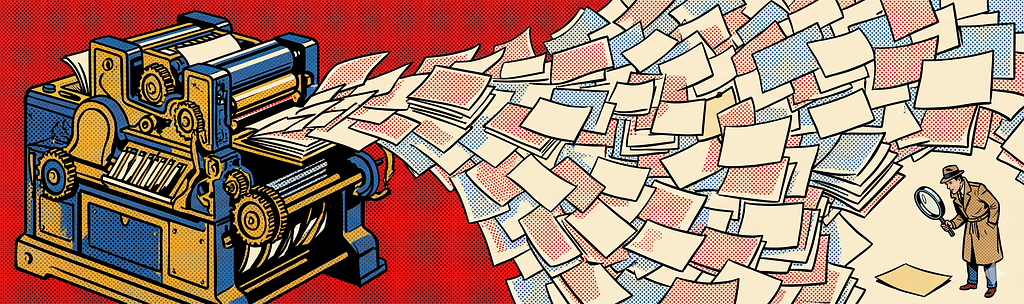
It costs ten times more to refute than making it. Generative AI drove the cost of making to zero. The fix is a design problem, not a fact-checking race.
In 2013 an Italian programmer named Alberto Brandolini watched a political talk show and posted a single sentence that has outlived almost everything else he said that year.
The amount of energy needed to refute bullshit is an order of magnitude bigger than to produce it.

People call it Brandolini’s law, or the bullshit asymmetry principle. He put a number on the gap: an order of magnitude, roughly ten to one. Brandolini was describing people — the pundit who asserts faster than anyone can check.
But the law never cared who was talking, and it applies just as cleanly to a machine. When a model hallucinates a confident, wrong answer, it generates that falsehood in a second, and a human still needs an afternoon to run it down.
For most of history that ratio was survivable. Producing a lie still cost something — you had to write it, broadcast it, or at least say it to someone’s face. Making and refuting were both paid in human hours, so they stayed in the same rough neighborhood. Ten to one is bad, but it’s a fight you can sometimes win. That neighborhood is gone.
This piece is about what happens to Brandolini’s law when one side of the ledger drops to zero and the other one doesn’t move at all — and what designers can do about it. You will not fix this; no one product ends the asymmetry. But you can moderate it inside the one product you control.
What It Is
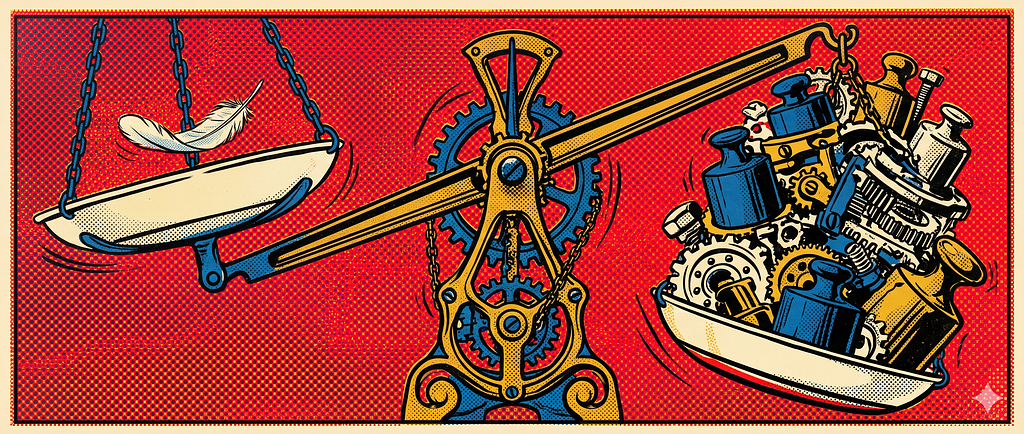
The Rule: Cheap To Make, Costly To Refute
Strip the profanity and the law is a claim about asymmetric cost.
Making a false or sloppy claim is cheap because it requires no grounding. You assert, and you’re done. Refuting it is expensive because grounding is the whole job. You gather evidence, supply context, anticipate the counter, and walk someone back from a thing they already half-believe. One sentence of nonsense can take a paragraph, a chart, and an afternoon to undo.
The asymmetry isn’t only about time, it’s also about cognitive load, attention, and trust, all of which are finite. A simple wrong idea is easier to hold in your head than a correct, complicated one. That’s why the flat-earth claim fits on a bumper sticker and the rebuttal needs physics, astronomy, and a little patience.
Making a false or sloppy claim is cheap because it requires no grounding. You assert and you’re done.
Brandolini was describing a world where both sides were still human, and the liar and the debunker drew from the same labor pool. The ten-to-one ratio held because producing bullshit, while easier than refuting it, was not actually free. Someone, somewhere, still had to make the thing.
It’s worth being precise about what bullshit is, because the word fits AI with uncomfortable accuracy. The philosopher Harry Frankfurt drew the line: a liar knows the truth and works to hide it, while a bullshitter simply doesn’t care whether what he says is true.
A language model has no concept of true or false — it predicts the plausible next words — so when it returns a confident, wrong answer, it isn’t lying.
It has nothing to lie about.
That is what makes it dangerous inside an interface. A hallucination doesn’t arrive flagged as a guess; it looks like every other answer on the screen, and the cost of telling it apart lands entirely on the reader.
So hallucinations don’t sit outside the bullshit asymmetry principle — they fall squarely inside it. Applied to a machine, the principle stops being a metaphor: the model produces bullshit at no cost, and a human still pays the order-of-magnitude price to refute it.
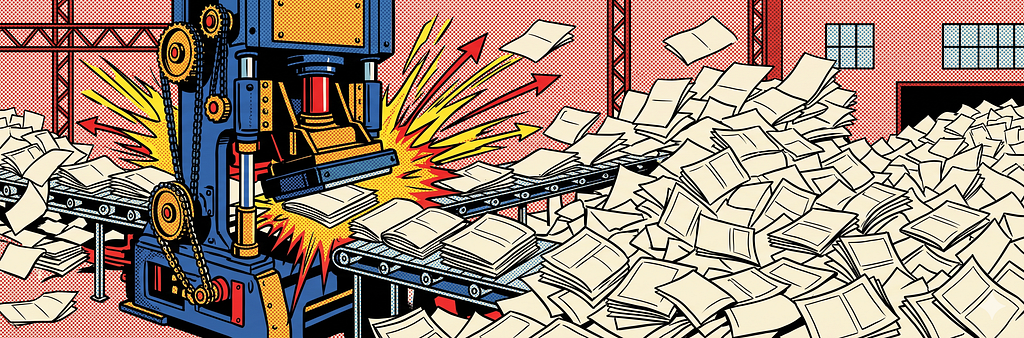
What AI Changed: Making Got Free
Here is the part that should keep designers up at night. Generative AI did not change the cost of refutation. It changed the cost of production. And it didn’t shave it — it collapsed it.
NewsGuard, which tracks unreliable AI-generated news sites, counted 3,006 AI content farm sites across sixteen languages as of March 2026, up from 2,089 the previous October. That is not a steady drip. The same team reports the category is growing by 300 to 500 new sites a month, and that one of their own analysts spun up a functioning content farm for about $100. A hundred dollars and a weekend now buys what used to require a newsroom.
This is the same mechanism I’ve written about in a friendlier context — when execution gets cheap, most of the ceremony built around scarce execution loses its point. The optimistic version of that story is a designer shipping a prototype before lunch. The other version is a propagandist shipping five hundred fake local newspapers before lunch. Same engine. The cost of producing a plausible artifact fell off a cliff, and falsehood rode the same elevator down as everything else.
And it isn’t only text. By industry estimates, the number of deepfakes circulating online jumped from roughly 500,000 in 2023 toward a projected 8 million in 2025 — video and audio fakes riding the same collapse in cost. Treat the exact figure as a forecast, not a census, but the direction isn’t in dispute.
A hundred dollars and a weekend now buys what used to require a newsroom and an army of reporters.
So back to Brandolini’s ratio.
The denominator — the cost of refuting — is unchanged, because refuting still means a human gathering evidence. The numerator — the cost of producing — is approaching zero. When you divide by a number that small, ten to one isn’t the ceiling anymore. It’s the floor.
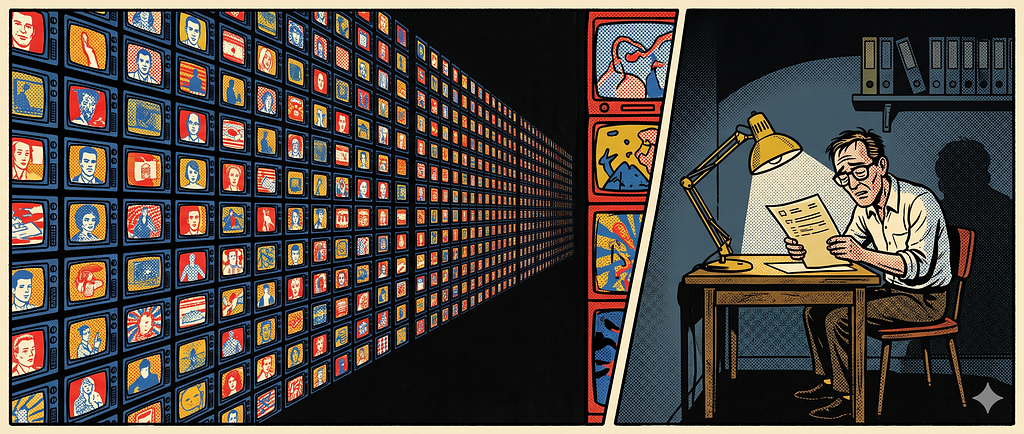
What AI Didn’t Change: Refuting Stayed Human
The natural hope is that detection keeps pace. It hasn’t, and the reason is structural, not temporary.
Start with people. A meta-analysis pooling 56 studies and more than 86,000 participants found average human accuracy at spotting deepfakes was 55.54 percent — a hair above a coin flip. A separate large study from the firm iProov was bleaker: only 0.1 percent of participants correctly identified every real and fake clip they were shown. One in a thousand.
Then there are the machines we’d hoped would rescue us. NewsGuard tested three leading chatbots on videos made with OpenAI’s Sora and found that the tools failed to recognize the clips as AI-generated in 78 to 95 percent of cases — including OpenAI’s own ChatGPT failing to flag OpenAI’s own model.
The detectors are roughly as fooled as we are.
Production can be parallelized across a thousand servers. Refutation runs one careful human at a time.
This is the asymmetry’s cruelest turn. Verification is irreducibly slow because it’s tied to reality. To check a claim you have to consult the world, and the world doesn’t respond at the speed of a language model. Production can be parallelized across a thousand servers. Refutation runs one careful human at a time. The two sides aren’t just unequal now; they’re scaling in opposite directions.
Why It Matters

Cheap Fakes, Expensive Doubt
The obvious cost of cheap production is the lies that land; the deeper cost is what those fakes do to everything around them.
When anyone can manufacture a convincing video, voice clip, or article in minutes, people stop trusting the real ones too. A genuine recording starts to carry an asterisk instead of the AI one and bad actors get to wave away authentic evidence as “probably AI,” and everyone else slides into a low-grade doubt about all of it — the screenshot, the quote, the photo that would once have settled an argument.
The World Economic Forum’s analysts put it plainly: just knowing that convincing fakes exist is enough to make people doubt what they see, including the truth.
The asymmetry doesn’t just raise the cost of refuting a lie. It raises the baseline cost of believing anything.
For anyone building products, this is where it turns practical. Trust is the foundation every interface runs on.
A user who gets burned by one convincing fake doesn’t become more careful about that one source — they become more cynical about all of them, including your scrupulously honest one. The asymmetry doesn’t just raise the cost of refuting a lie. It raises the baseline cost of believing anything, and that tax falls on every legitimate product in the feed.
Already The Weather, Not The Forecast
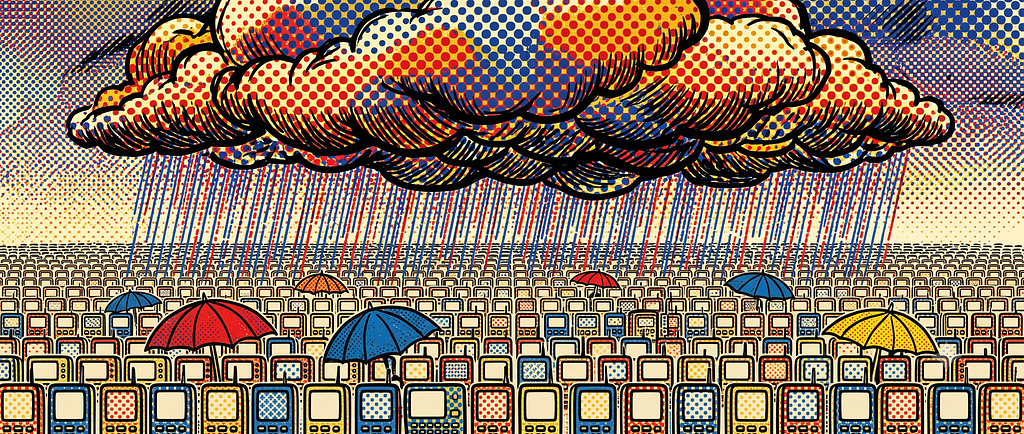
It’s raining already; we need umbrellas.
The World Economic Forum’s Global Risks Report 2026 ranked misinformation and disinformation the second most severe short-term global risk, behind only geoeconomic confrontation — the third year running it has sat near the top.
Its analysts frame the threat as an accelerant because it doesn’t only do its own damage; it makes nearly every other crisis on the list worse. A contested election becomes harder to settle when both sides can dismiss inconvenient footage as synthetic. A market panic moves faster when a fabricated statement spreads before anyone can confirm it. A public-health message competes with a thousand confident fakes. The asymmetry isn’t a category of risk so much as a multiplier on all the others.
The experts aren’t worried about a future problem. They’re describing the current weather, and it’s a storm.
And weather lands somewhere specific — not in the abstract, but in feeds, search results, inboxes, and the small “is this real” judgments people make hundreds of times a day without noticing. That surface, the one place where the asymmetry actually touches a human, is the one designers own. Which is why the rest of this piece is addressed to them.
How We Fix It
First, Treat It As A Design Problem
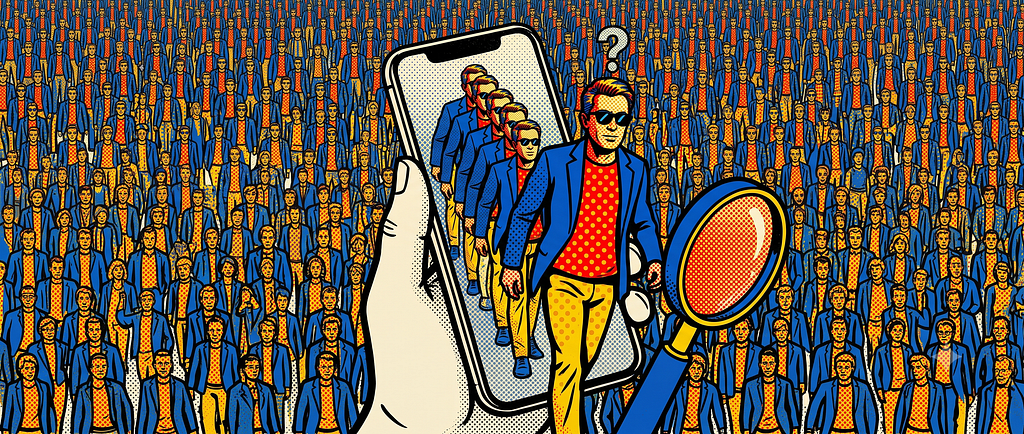
It would be easy to file this under policy, or journalism, or somebody else’s department. That instinct is wrong. Brandolini’s law is now a design problem, because the asymmetry plays out inside interfaces — feeds, search results, inboxes, support queues, the little “verified” checkmarks we sprinkle around and rarely earn.
Maggie Appleton saw the shape of this early. In her essay on the expanding dark forest and generative AI, she argued that as the web fills with machine-made content, the scarce and valuable thing becomes proof that a human was actually here. That reframing matters for anyone who designs trust surfaces.
“That dark forest is about to expand. Large Language Models (LLMs) that can instantly generate coherent swaths of human-like text have just joined the party.”
The job is shifting from making content look credible to making it clear a human was involved and where the thing actually came from — not the same task, and they often pull against each other.
The job is shifting from making content look credible to making it clear a human was involved and where the thing actually came from.
Regulators are circling the same problem from the other end. Under the EU AI Act, the Article 50 provisions requiring that AI-generated and manipulated content be labeled become enforceable in August 2026. Labeling is a design surface. Someone has to decide what the label says, where it sits, whether it survives a screenshot, and what a user does in the half-second after they see it. Get that wrong and you’ve built a compliance checkbox that moves no one. The asymmetry doesn’t care about your legal department.
Action items:
- Audit your trust signals. Look at every badge, “verified,” and AI label you ship today, and ask two questions of each: does it survive a screenshot, and does a tired user know what to do in the half-second after seeing it?
- Give labeling an owner. Right now disclosure is usually nobody’s job, which is exactly why it reads as compliance theater. Put a name next to it and a date on it.
- Map the EU rule to your real screens. The August 2026 labeling requirement lands on specific surfaces, not in the abstract. Walk them yourself before legal does it for you with a generic banner nobody reads.
Then Design For The Asymmetry, Not Against It
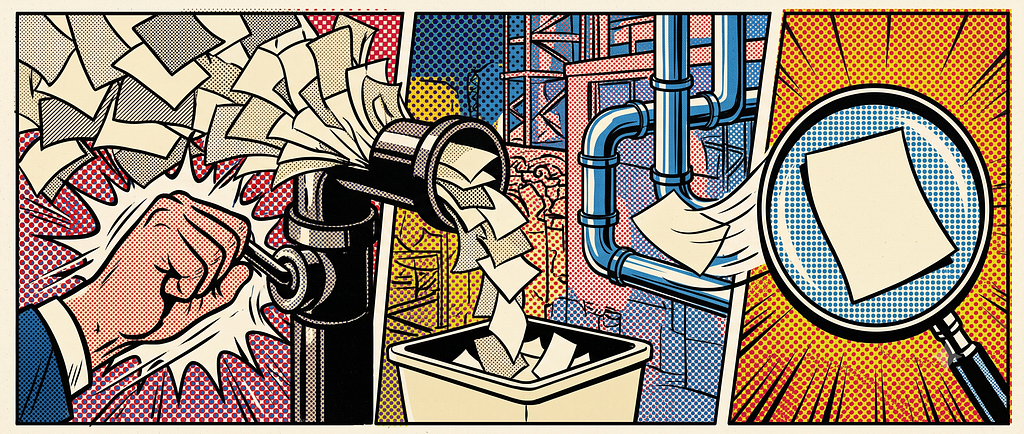
If refutation will always lose a footrace against production, then designing to win that race is a losing strategy. You can’t fact-check your way out of an infinite content firehose, and the data above says neither people nor detectors are good enough to try. So change the board instead of playing the game faster.
Three moves are worth more than a hundred debunking widgets.
First, raise the cost of producing, not just the cost of believing. The whole problem is that production is free, so reintroducing a little friction at the point of creation — rate limits, signed source records, proof-of-personhood where it genuinely fits — does more than any warning banner downstream.
Second, lower the cost of verifying; this is the half designers actually control. Surface the source inline instead of two taps away, show the source trail by default, and when the answer comes from a model, make the system explain itself — show what it drew on, expose its reasoning, flag where it’s unsure. Saleema Amershi and her co-authors put this in their guidelines for human-AI interaction years ago: make clear why the system did what it did.
A hallucination is expensive to refute precisely because it arrives as a bare, confident claim with no handle. Explainability is the handle. But an explanation can be theater too: a fluent paragraph of after-the-fact reasoning, or a citation that doesn’t resolve, lowers the felt cost of checking without lowering the real one.
Real explainability means verifiable sources and honest uncertainty, not a confident-sounding “why.” Make checking a one-second glance rather than an afternoon’s research, and you’ve attacked the denominator Brandolini said you couldn’t move.
Third, design defaults that assume the firehose. Most of your users will never investigate anything; the vast majority who suspect a fake take no action at all. The safe default can’t depend on a motivated, skeptical user who doesn’t exist. It has to hold for the tired person scrolling at 11 p.m.
What you can decide, as a designer, is which side of the ledger your product subsidizes. Right now, most quietly subsidize production.
Action items:
- Make producing cost something. Where creation is currently free, add friction — rate limits, signed source records, proof-of-personhood where it genuinely fits. A little cost upstream beats a hundred warnings downstream.
- Make checking a glance. Surface the source inline, show the source trail by default, and when an answer comes from a model, make it show its work — what it drew on, how sure it is — so verifying is a one-second look, not an afternoon.
- Pressure-test your explanations for theater. Click through three of your own AI-generated “reasons” or citations and confirm they actually resolve. A fluent explanation that doesn’t check out is worse than none.
Finally, Build On Shared Proof, Not Private Patches
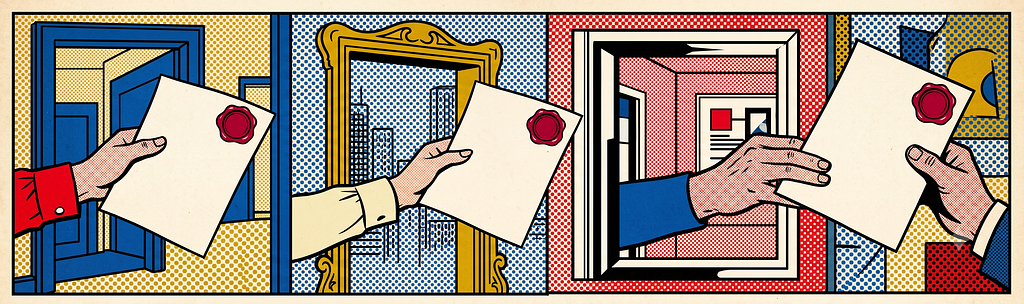
Every fix in the last section happens inside your own product, and that’s the catch. A trust badge you invent means something only inside your four walls. The moment a screenshot leaves the building, your signal is gone and the asymmetry snaps back to full strength.
Proof that can’t travel isn’t proof. It’s decoration.
The version that survives contact with the open web is shared infrastructure — a record of origin that rides along with the file instead of living in your interface. That is what Content Credentials is built to do: a cryptographically signed record of where a piece of media came from and how it was changed, maintained by a coalition that includes Adobe, Microsoft, Google, OpenAI, and Sony.
It’s already shipping, not theoretical. Adobe’s tools write Content Credentials into exported files, recent Google Pixel phones sign photos at the moment of capture, and LinkedIn shows a small marker on images that arrive carrying one. The EU’s labeling mandate pushes the same direction by law.
And it isn’t a fringe industry bet: the U.S. AI Safety Institute’s technical overview of content transparency treats origin-tracking as a primary approach to synthetic-content risk, alongside watermarking and detection. You don’t have to invent the standard. You have to adopt it, and then decide how it shows up.
That second part is the design work, and it’s harder than the cryptography. It’s the same explainability problem from the last move, pointed in a new direction.
There the question was “why did the system say this”; here it’s “where did this come from, and what happened to it on the way.” Same job either way: take a record the machine can read and make it legible to a person in the half-second they’ll spend.
Even the agencies pushing adoption say so. A U.S. cybersecurity advisory recommending Content Credentials notes that the data does nothing until it’s presented to people. A credential nobody sees is no better than no credential. And the standard’s honest weakness is that platforms routinely strip it on upload, so the proof falls off exactly when the content travels farthest. The standard hands you the raw material; whether a user understands the origin is still yours to design.
Action items:
- Start with your most-shared artifact. Attach portable Content Credentials to the one thing people screenshot and repost, then test the ugly case — copy it out, drop it elsewhere, and check whether the signal survives the trip. If it doesn’t reach the next surface, you’ve shipped a badge, not proof.
- Switch on what you already have. Turn on credential embedding in the tools you use to generate and export. Most of the plumbing exists; it’s usually just switched off.
- Treat surfacing as explainability, not decoration. A non-expert should grasp where the thing came from and what changed, at a glance, without opening a panel. The signing is the easy part; the explanation is the design.
Conclusion
Brandolini’s law was never really about politics or talk shows, it was a statement about cost — that nonsense is cheap to make and dear to undo, and that the gap between those two numbers shapes what a society ends up believing.
For a long time the gap was painful but bounded.
Ten to one is a war you can lose battles in and still survive.
Generative AI didn’t repeal the law. It did something more unsettling: it drove one term in the equation toward zero while leaving the other one exactly where it was.
Production went industrial. Verification stayed artisanal, tied to a human consulting a stubborn, slow-moving reality.
That’s the part to sit with. We are not facing more of the old problem. We’re facing a different one, where the cheapest thing in the system is the false thing, and the most expensive thing is the truth. Designers didn’t create that asymmetry, but it now lives inside the products they build — in every feed, label, and default. The honest question isn’t whether you can refute everything. You can’t. It’s whether the thing you’re shipping makes producing the lie a little harder, or a lot easier.
Further Reading
- Harry Frankfurt, On Bullshit (2005), and Hicks, Humphries & Slater, “ChatGPT is bullshit” (2024) — the case that AI “hallucination” is bullshit in the precise, truth-indifferent sense.
- Amershi et al., “Guidelines for Human-AI Interaction” (CHI 2019) — eighteen design guidelines, including “make clear why the system did what it did.”
- NIST, “Reducing Risks Posed by Synthetic Content” (AI 100–4, 2024) — technical approaches to content transparency.
- Content Credentials — the open standard for attaching a portable origin record to media.

The bullshit asymmetry principle was survivable. AI made production of slop almost free. was originally published in UX Collective on Medium, where people are continuing the conversation by highlighting and responding to this story.
This post first appeared on Read More