
10 AI skills you should learn in 2026
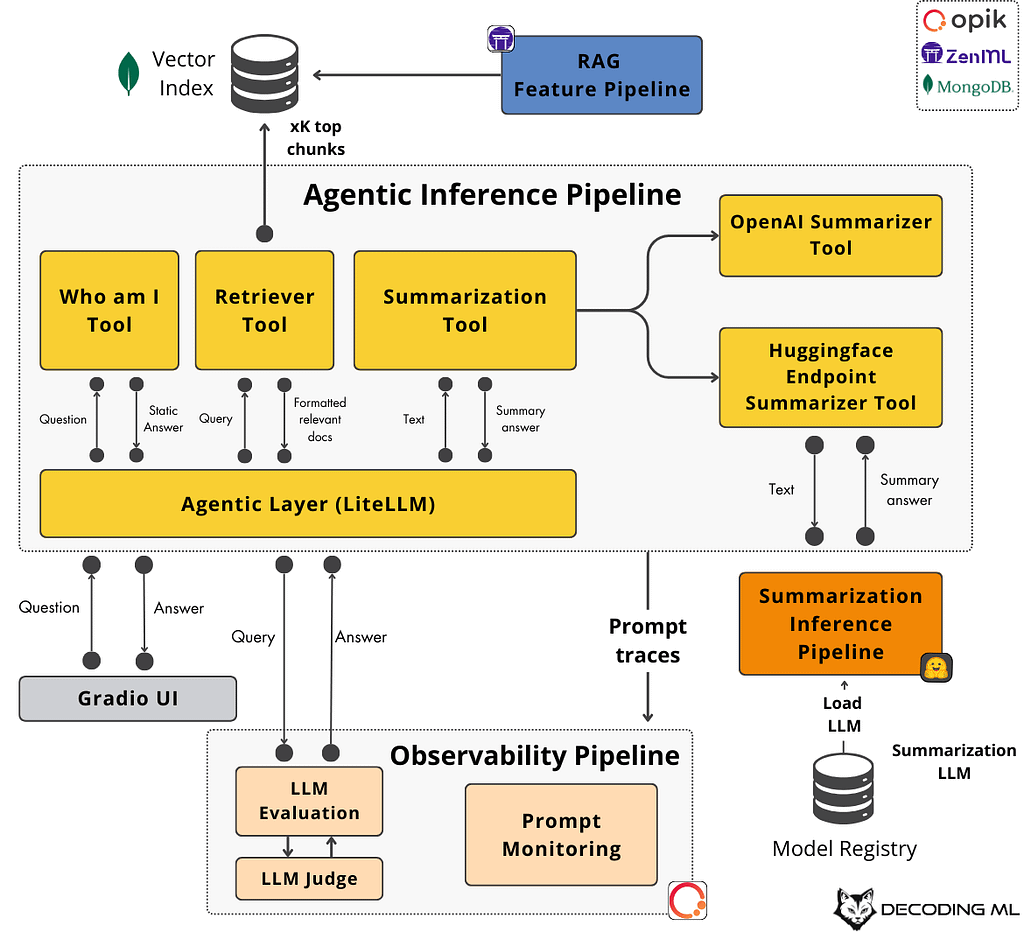
Hello folks, the definition of an AI engineer is evolving rapidly.
A year ago, an AI engineer might have been someone who could fine-tune models and write prompts. Today? The skill set is dramatically broader.
Companies aren’t just hiring people who understand neural networks. They’re hiring people who can build complete AI systems — from architecture to deployment to optimization to agent orchestration.
The best AI engineers in 2026 possess a specific combination of skills. Not all technical. Not all theoretical. A blend that positions them to solve real problems at scale.
After analyzing job postings, interviewing senior AI engineers, and reviewing industry trends, I’ve identified the 10 critical skills every AI engineer needs in 2026.
More importantly, I’ve mapped each skill to the best learning resources available — courses, books, platforms — so you can develop mastery systematically.
The 10 Essential Skills for AI Engineers in 2026
Without any further ado, here are 10 important skills, which I think every software engineer, AI engineer should learn in 2026:
1. Python Mastery (The Foundation)
Why It Matters: Python isn’t just a language for AI engineers — it’s THE language. Every major AI framework runs on Python. Every company uses Python. If your Python isn’t solid, your AI work suffers.
What You Need to Know:
- Core Python syntax and data structures
- Object-oriented programming (classes, inheritance, polymorphism)
- Functional programming concepts (decorators, generators, lambdas)
- Working with common libraries (collections, itertools, datetime)
- File I/O and handling different data formats
- Error handling and debugging
- Writing efficient, readable code
Best Resource:
100 Days of Code: The Complete Python Pro Bootcamp for 2025 by Dr. Angela Yu
Why: 60+ hours of comprehensive Python with 100+ projects. You’ll actually build things, not just watch tutorials. This is the #1 recommended Python course on Reddit for good reason.
Alternative Resource:
Complete Python Bootcamp From Zero to Hero in Python by Jose Portilla
Why: If you prefer deeper theoretical understanding before jumping into projects, Jose’s course teaches Python with precision. Taught to employees at major companies.
Time Investment: 4–6 weeks
2. Machine Learning Fundamentals
Why It Matters: You need to understand why machine learning works, not just how to call sklearn functions. This knowledge informs every architectural decision you make.
What You Need to Know:
- Supervised vs. unsupervised learning
- Regression, classification, clustering fundamentals
- Train/validation/test splits and cross-validation
- Overfitting and regularization
- Feature engineering and selection
- Common algorithms: linear regression, logistic regression, decision trees, random forests, SVM, KNN
- Evaluation metrics: accuracy, precision, recall, F1, AUC, MSE, RMSE
- Hyperparameter tuning
- Working with real, messy datasets
Best Resource:
Python for Data Science and Machine Learning Bootcamp by Jose Portilla
Why: 25+ hours covering the complete ML workflow. You’ll learn NumPy, Pandas, Matplotlib, Scikit-Learn. Teaches not just “how” but “when and why.”
Complementary Resource:
Machine Learning A-Z™: AI, Python & R + ChatGPT Prize
Why: 40+ hours with code templates for every algorithm. Comprehensive coverage of ML algorithms you’ll need to understand.
Time Investment: 6–8 weeks
3. Deep Learning & Neural Networks
Why It Matters: Modern AI is built on deep learning. Transformers. Diffusion models. Large language models. They’re all neural networks. You need to understand how they work.
What You Need to Know:
- Neural network architecture: layers, neurons, activation functions
- Backpropagation and gradient descent
- Convolutional Neural Networks (CNNs) for images
- Recurrent Neural Networks (RNNs) for sequences
- Attention mechanisms and transformers
- Loss functions and optimization
- Transfer learning and fine-tuning
- Practical frameworks: TensorFlow, PyTorch
Best Resource:
Build a Large Language Model (from Scratch) by Sebastian Raschka, PhD
Why: The best book for understanding LLMs from first principles. You’ll understand transformers, attention, tokenization deeply. This transforms your intuition about how models work.
Video Companion:
Deep Learning Nanodegree on Udacity
Why: 4 months of structured learning with mentorship. Projects build your portfolio. Hands-on implementation in PyTorch.
Time Investment: 8–12 weeks
4. Large Language Models (LLMs) and Transformers
Why It Matters: LLMs are the foundation of 2026 AI. Understanding how to work with them — prompting, fine-tuning, retrieval, evaluation — is essential.
What You Need to Know:
- Transformer architecture in depth
- How LLMs are trained and fine-tuned
- Prompt engineering at scale
- Token optimization and context window management
- Few-shot learning and chain-of-thought prompting
- Working with different LLM providers (OpenAI, Anthropic, open-source)
- Evaluation metrics for LLM quality
- Cost optimization and latency reduction
- RAG (Retrieval-Augmented Generation) systems
Best Resource:
LLM Engineering: Master AI, Large Language Models & Agents by multiple instructors
Why: 20+ hours covering LLMs, fine-tuning, RAG, agents. Teaches both theory and implementation. 89,000+ students. Extremely current for 2026.
Book Resource:
The LLM Engineering Handbook by Paul Iusztin and Maxime Labonne
Why: Practical guide to building LLM applications in production. Covers RAG, evaluation, deployment, orchestration.
Video Course:
Generative AI Nanodegree on Udacity
Why: 3–4 months of structured learning. Fine-tuning, RAG systems, deployment. Hands-on projects.
Time Investment: 6–10 weeks
5. Agentic AI Systems (The Future)
Why It Matters: Agentic AI is where the industry is heading. Autonomous agents. Multi-agent systems. Agent orchestration. This is the frontier of AI engineering.
What You Need to Know:
- Agent architecture and design patterns
- Multi-agent systems and orchestration
- Tool integration and function calling
- Planning and reasoning in agents
- Agent frameworks: LangGraph, CrewAI, AutoGen
- Agent state management and memory
- Building autonomous workflows
- Production deployment of agents
- Monitoring and debugging agents
Best Resource:
The Complete Agentic AI Engineering Course (2026)
Why: Most comprehensive course on agentic systems. Covers OpenAI Agents SDK, LangGraph, CrewAI, MCP. Production-ready patterns.
Specialized Resource:
Agentic AI Nanodegree on Udacity
Why: 4–5 months with mentorship. Build 8 real-world agent projects. Production-grade patterns. Includes capstone project.
Framework Deep-Dive:
Build Intelligent Multi-Agent Applications with AutoGen 0.7
Why: Microsoft’s AutoGen is becoming the standard. This course covers latest features, optimization, production deployment.
Time Investment: 8–12 weeks
6. System Design (Critical for Senior Roles)
Why It Matters: As you progress, system design becomes essential. You need to architect AI systems that scale, are reliable, and solve real problems.
What You Need to Know:
- Scalability and load balancing
- Database design (SQL, NoSQL, vector databases)
- Caching strategies (Redis, etc.)
- Message queues and asynchronous processing
- Microservices architecture
- API design
- Monitoring and observability
- Cost optimization
- Trade-offs between consistency, availability, latency
- Design patterns specific to AI systems
Best Resource:
ByteByteGo System Design Course
Why: The gold standard for system design education. Real-world case studies (Netflix, YouTube, Discord). Animated visuals. Continuously updated. Use code JALJAD for discount.
Book Resource:
System Design Interview — An Insider’s Guide by Alex Xu
Why: The definitive guide. Real interview questions with detailed walkthroughs. Essential reference material.
Deep Dive Book:
Designing Data-Intensive Applications by Martin Kleppmann
Why: The bible of distributed systems design. Understand databases, caching, batch processing, streams deeply. Timeless knowledge.
Practice Platform:
Codemia.io for System Design Problems
Why: 120+ system design problems with expert solutions. Interactive drawing board. AI feedback on your designs.
Time Investment: 6–10 weeks
7. Data Engineering & MLOps
Why It Matters: AI systems need data. Good data engineers are becoming as valuable as AI engineers. You don’t need to be an expert, but understanding data pipelines, infrastructure, and operations is essential.
What You Need to Know:
- Data pipelines and ETL/ELT
- Data warehousing concepts
- Distributed computing (Spark)
- Message queues and streaming
- SQL and data manipulation
- Infrastructure as code
- Docker and containerization
- Model deployment and serving
- Monitoring ML systems
- Data quality and validation
Best Resource:
Data Engineering for Beginners: Learn SQL, Python & Spark
Why: Perfect introduction to data engineering for AI engineers. SQL, Python, Spark fundamentals. Hands-on projects.
Comprehensive Path:
IBM Data Engineering Professional Certificate on Coursera
Why: 3–4 month professional certificate. Covers data platforms, pipelines, warehousing. Industry-recognized credential.
Interactive Learning:
Data Engineering Foundations in Python on Educative
Why: Browser-based learning. Python, Kafka, Spark, Airflow, dbt. In-browser labs. Hands-on immediately.
Time Investment: 6–10 weeks
8. Prompt Engineering & RAG Systems
Why It Matters: Most AI engineers will spend their time working with LLMs. Knowing how to effectively prompt them and build RAG systems is a practical superpower.
What You Need to Know:
- Prompt engineering techniques: few-shot, chain-of-thought, role-based
- Context management and token optimization
- RAG architecture and implementation
- Vector databases and embeddings
- Retrieval strategies and ranking
- Evaluation of RAG systems
- Building AI applications with LLMs
- Handling failures and edge cases
Best Resource:
Coding With AI — Planning To Production
Why: Brad Traversy (legendary instructor) teaches full-stack AI development. From planning to deployment. RAG, prompting, production considerations.
Book Resource:
Prompt Engineering for LLMs: The Art and Science by O’Reilly
Why: Comprehensive guide beyond basic prompting. Reasoning patterns, optimization, advanced techniques.
Time Investment: 4–6 weeks
9. Software Architecture & Design Patterns
Why It Matters: Good code architecture is what separates junior engineers from senior ones. Understanding design patterns helps you build maintainable, scalable systems.
What You Need to Know:
- Object-oriented design principles (SOLID)
- Design patterns: Factory, Strategy, Observer, Decorator, etc.
- Architectural patterns: MVC, microservices, event-driven
- Code organization and modularity
- Testing and quality assurance
- Refactoring techniques
- Clean code principles
Best Resource:
The Complete Claude Code & Claude Cowork Masterclass [2026] by Prof Ryan Ahmed
Why: Teaches architecture patterns specifically for AI development. Claude Code integration. Building structured AI applications.
ByteByteGo Resource:
Object-Oriented Design on ByteByteGo
Why: Covers OOP design deeply. Design patterns. Real-world examples.
Book Resource:
Head First Software Architecture by O’Reilly
Why: Visual, engaging guide to architectural thinking. Patterns used at top tech companies. Perfect for aspiring architects.
Time Investment: 4–6 weeks
10. Communication & Interview Skills
Why It Matters: Technical skill alone doesn’t guarantee success. You need to communicate clearly, explain your thinking, handle pressure, and interview well.
What You Need to Know:
- System design interview format and expectations
- Coding interview problem-solving approach
- Behavioral interview preparation
- Whiteboarding and explaining your thinking
- Asking clarifying questions
- Discussing trade-offs explicitly
- Handling follow-up questions under pressure
- Communication in team settings
- Writing clear documentation
Best Resource:
Coding Interview Patterns: Nail Your Next Coding Interview
Why: Teaches patterns that transcend specific problems. How to approach interviews systematically.
Interview Practice:
Exponent’s System Design Interview Prep
Why: Mock interviews with real engineers. Feedback on communication, thinking process, and technical accuracy. 70% off for limited time.
Book Resource:
Cracking the Coding Interview by Gayle Laakmann McDowell
Why: The gold standard interview preparation book. 189 questions with detailed solutions. By author from Google, Amazon, Apple.
Time Investment: 4–8 weeks
Combining Skills Into Practice
Reading about these skills is one thing. Applying them is another.
Recommended Practice Projects:
- Build an end-to-end ML project: Data collection → processing → modeling → evaluation
- Create a RAG system: Document ingestion → embedding → retrieval → LLM integration
- Design and build an agent: Single agent → multi-agent system
- System design exercise: Design a production AI system for a real use case
- Deploy something: Get code running in production (cloud, local server, etc.)
These projects will teach more than any course.
Final Thoughts
2026 is the year where “I know Python and PyTorch” is no longer enough to be competitive as an AI engineer.
The best AI engineers are:
- Deep in one or two specialized areas (LLMs, Agentic AI, System Design)
- Competent across all the fundamentals
- Comfortable with infrastructure and operations
- Excellent communicators who can explain complex systems
- Builders who ship real products, not just researchers
This list of 10 skills represents what’s needed to be that engineer.
You don’t need to learn everything simultaneously. Pick one area, develop depth, then expand outward. The resources above are curated to help you do that efficiently.
Start with skill #1 (Python Mastery). Everything else builds on that foundation. Pick a course, commit fully, code along with every lesson, complete every project.
In 6–12 months of focused study with these resources, you’ll be positioned for the most exciting opportunities in AI engineering.
The time to start is now.
P.S. — If you want to specialize quickly in the highest-demand skill right now, go straight to Skill #5 (Agentic AI Systems) after Python fundamentals. Agentic AI is where companies are desperately hiring, and the skill gap is huge.
But don’t skip the foundations. They matter more than you think.
Good luck!
Production AI Agents Course: Learn Agent Engineering

10 Skills Every AI Engineer Should Learn in 2026 was originally published in Javarevisited on Medium, where people are continuing the conversation by highlighting and responding to this story.
This post first appeared on Read More