
My Favorite Udemy courses for Java Developers
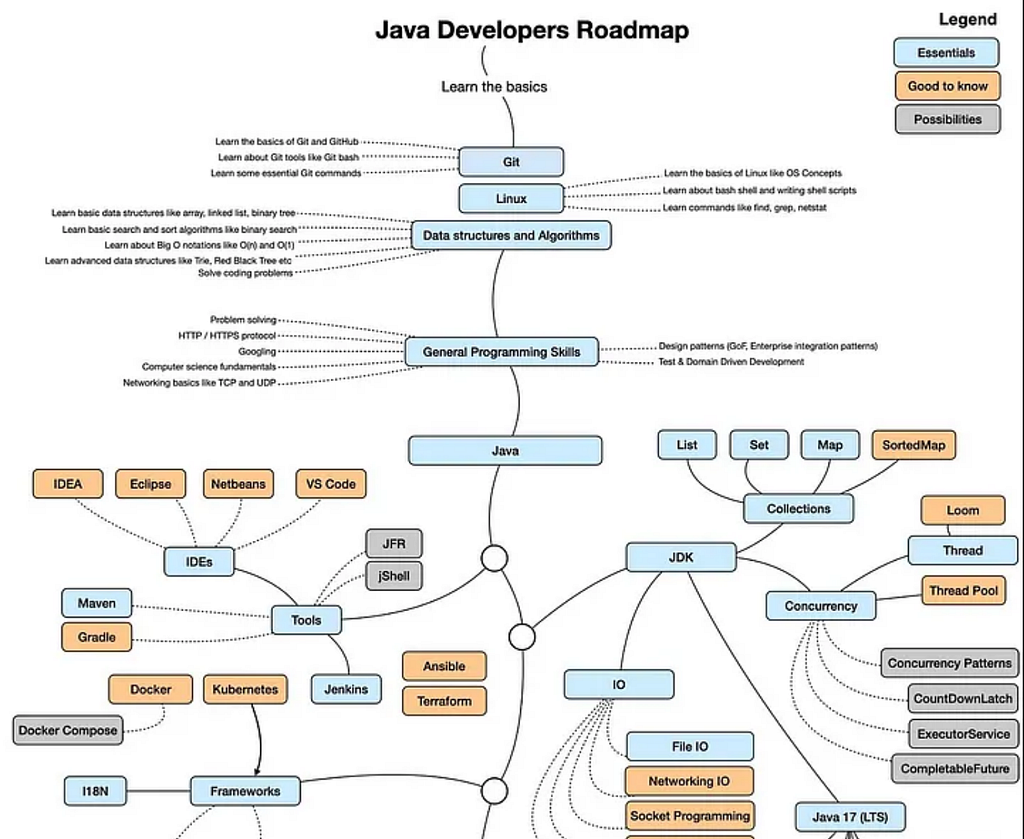
Hello everyone — Java is not going anywhere. Despite every “Java is dead” headline that appears every few years, it remains the dominant language in backend development, fintech, enterprise systems, and microservices architecture.
In 2026, it’s also one of the most in-demand languages for cloud-native and AI-adjacent engineering roles.
The problem isn’t a shortage of Java courses on Udemy — it’s that there are too many, with wildly different quality levels, and too many are outdated the moment they’re published in a language that ships a new version every six months.
I’ve gone through 20+ Java courses on Udemy over the years. These are the 10 that are actually worth your time — covering everything from core Java fundamentals to Spring Boot, microservices, concurrency, performance tuning, testing, and CI/CD.
If you plan to take multiple courses, Udemy’s Personal Plan at ~$30/month gives you unlimited access to 11,000+ courses. For developers actively building skills across multiple Java topics, it’s better value than buying individually.
Online Courses – Learn Anything, On Your Schedule | Udemy
10 Best Udemy Courses for Java Developers in 2026
Without any further ado, here are the top Udemy courses Java developers can join to learn essential Java development skills from programming langue to build tools.
1. Java Programming Masterclass
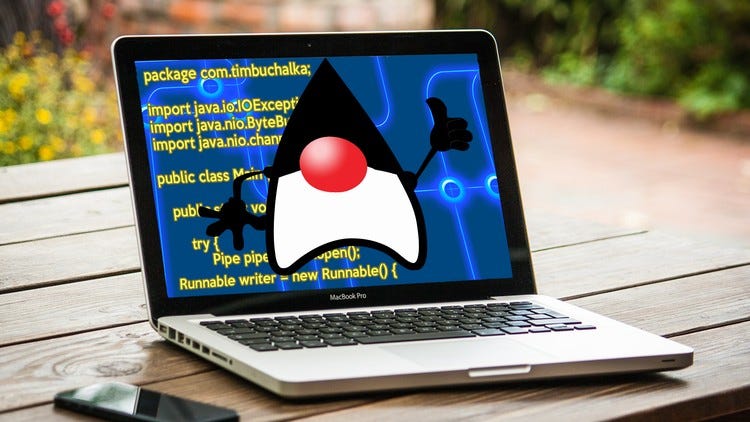
If you’re starting your Java journey or want to rebuild your foundation properly, this is where to begin.
Tim Buchalka’s Java Masterclass is one of the most comprehensive and consistently updated Java courses on Udemy. That last point matters enormously — Java ships a new version every six months, and most Java courses are outdated within a year of publication.
Tim actively updates this course to keep pace, and the Java 21 coverage means you’re learning a Long-Term Support version that’s widely deployed in production.
The course covers everything from variables and data types through object-oriented programming, collections, generics, exception handling, lambdas, streams, and modern Java features.
Whether you’re starting from scratch or filling in gaps after years of self-taught Java, this is the most reliable single resource for core Java fundamentals.
Best for: Beginners learning Java from scratch, self-taught developers who want to formalize their foundations, anyone moving to Java from another language
Here is the link to — Join Java Programming Masterclass
Java Masterclass 2025: 130+ Hours of Expert Lessons
2. [NEW] Spring Boot 3, Spring 6 & Hibernate for Beginners

Spring Boot is the framework that powers the majority of Java backend development in 2026. If you want a Java developer job — not just Java knowledge — you need to know Spring Boot, and this is the most popular Spring course on Udemy by a wide margin with over 350,000 students enrolled.
Chad Darby’s course is the definitive starting point. It takes you from basic Spring concepts through Spring Boot, Spring Data, Spring Security, REST APIs, and Hibernate — building a complete picture of the Spring ecosystem. It’s also recently updated for Spring 6 and Spring Boot 3, so you’re learning the current versions that production teams are actually running.
Best for: Java developers who need Spring Boot skills for the job market, anyone building REST APIs or web applications in Java, developers transitioning into backend roles
Here is the link to — Join [NEW] Spring Boot 3, Spring 6 & Hibernate for Beginners
Spring Boot 4, Spring 7 & Hibernate for Beginners
3. Java Multithreading, Concurrency & Performance Optimization

Multithreading and concurrency are the skills that separate junior Java developers from senior ones — and they show up in almost every Java job description for mid-level and above roles. Most Java developers use synchronized and volatile without fully understanding what they’re doing. This course changes that.
The course goes deep on the Java memory model, thread safety, locks, executors, the fork-join framework, and concurrent data structures — explaining not just how to use these tools but why they work, when they’re needed, and what subtle bugs they prevent. If you’ve ever introduced a race condition or a deadlock into production code, you know exactly why this knowledge matters.
Best for: Intermediate to senior Java developers, anyone preparing for Java technical interviews, backend engineers building high-throughput systems
Here is the link to — Join Java Multithreading, Concurrency & Performance Optimization
Java Multithreading, Concurrency & Performance Optimization
4. Spring Boot Microservices with Spring Cloud — Beginner to Guru
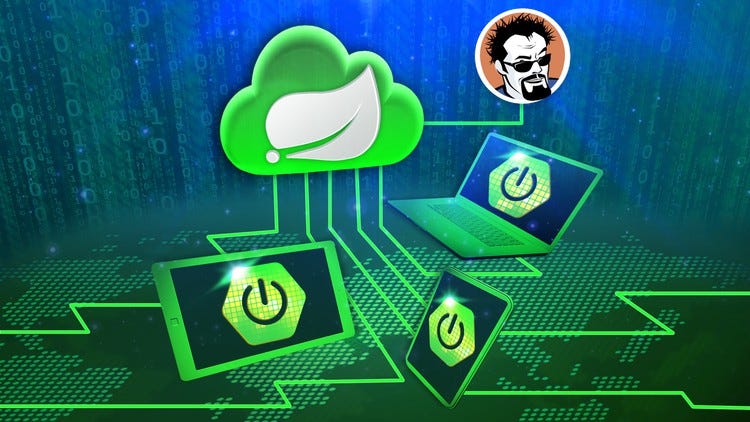
Microservices architecture is now the standard for enterprise Java development, and Spring Cloud is the dominant framework for building it. If you want to work at companies deploying Java at scale — banks, fintechs, large enterprise software companies — this skill set is non-negotiable.
This course teaches you how to build production-grade microservices using Spring Boot and Spring Cloud, covering service discovery with Eureka, API gateway patterns, circuit breakers, distributed configuration, and cloud deployment. The depth here goes well beyond the basic Spring Boot REST API tutorials — this is how Java systems actually get built in 2026.
Best for: Java developers targeting senior backend or cloud roles, engineers transitioning from monolithic to microservices architecture, anyone building cloud-native Java applications
Here is the link to — Join Spring Boot Microservices with Spring Cloud — Beginner to Guru
Spring Boot Microservices with Spring Cloud Beginner to Guru
5. Performance Tuning for Java Applications

This is the course that separates the top 1% of Java developers from everyone else. The vast majority of Java developers have never opened a profiler, analyzed a heap dump, or tuned garbage collection settings. If you learn to do these things, you’re solving problems that most Java developers can’t.
The course teaches you how to diagnose and fix Java application performance problems using real tools: profilers, heap analyzers, garbage collection logs, and memory analysis tools. You’ll understand how the JVM actually manages memory, what causes memory leaks, and how to optimize GC for different workloads. These skills will directly differentiate you in interviews and on the job.
Best for: Intermediate to senior Java developers who want to go beyond writing code to understanding how the JVM actually runs it, engineers responsible for production Java systems
Here is the link to — Join Performance Tuning for Java Applications
Java Application Performance Tuning and Memory Management
6. Hibernate and Java Persistence API (JPA) Fundamentals
You’ll get a Hibernate introduction in the Spring Boot course above, but if you’re working on applications where database interaction is central — and in enterprise Java, that’s most of them — a dedicated deep dive on Hibernate and JPA is worth the investment.
This course covers the full JPA specification and Hibernate’s implementation of it: entity relationships, lazy vs. eager loading, the persistence context, caching, JPQL, and the common performance pitfalls that make Hibernate applications slow.
Understanding these concepts properly prevents the N+1 query problems and transaction mismanagement that cause a disproportionate number of Java production incidents.
Best for: Java developers working with relational databases, anyone who’s encountered Hibernate performance problems and wants to understand why they happen and how to fix them
Here is the link to — Join Hibernate and Java Persistence API (JPA) Fundamentals
Hibernate and Java Persistence API (JPA) Fundamentals
7. JUnit and Mockito Crash Course
Unit testing is not optional for professional Java developers. JUnit and Mockito are the standard testing tools in the Java ecosystem — JUnit 5 for test structure and lifecycle, Mockito for mocking dependencies and verifying behavior. Virtually every Java role at a serious company will expect you to write and maintain unit tests with these frameworks.
This crash course gets you writing effective, meaningful tests quickly. It covers the patterns that make tests actually useful — test isolation, dependency injection for testability, when and how to use mocks vs. real objects, and how to test Spring Boot applications end-to-end. If your current test coverage is thin or your tests are brittle, this is the course that fixes that.
Best for: All Java developers — unit testing is a foundational professional skill, developers whose codebases have insufficient test coverage
Here is the link to — Join JUnit and Mockito Crash Course
JUnit and Mockito Crash Course
8. Jenkins, From Zero To Hero: Become a DevOps Jenkins Master

Professional Java development in 2026 extends well beyond writing Java code. Senior developers are expected to understand and operate CI/CD pipelines, and Jenkins remains the most widely deployed CI/CD tool in enterprise Java environments.
This course teaches you how to set up and operate Jenkins for automating builds, tests, and deployments — creating the pipelines that take your Java code from commit to production.
Understanding how your code gets built and deployed is essential context for writing code that’s actually production-ready, and Jenkins knowledge is a concrete resume differentiator that many Java developers skip.
Best for: Mid to senior Java developers who want to be effective across the full development lifecycle, anyone targeting DevOps-adjacent roles, engineers responsible for build and deployment infrastructure
Here is the link to — Join Jenkins, From Zero To Hero: Become a DevOps Jenkins Master
Jenkins, From Zero To Hero: Become a DevOps Jenkins Master
9. Quarkus — Getting Started with Supersonic Subatomic Java

Spring Boot is the dominant framework for Java microservices — but Quarkus is the most exciting alternative, and adoption is growing fast. Quarkus is built specifically for containers and serverless environments, offering dramatically lower startup times and memory footprints compared to Spring Boot.
For cloud-native workloads where cold start time and resource cost matter, Quarkus is increasingly the better choice.
This course is a practical introduction to Quarkus — how it differs from Spring Boot, how to build microservices with it, and how to deploy to Kubernetes and serverless platforms.
As Quarkus adoption grows in 2026, familiarity with it becomes a differentiating skill rather than a niche one.
Best for: Experienced Java developers who want to explore alternatives to Spring Boot, engineers building serverless or Kubernetes-native Java applications, developers curious about the future of cloud-native Java
Here is the link to — Join Quarkus — Getting Started with Supersonic Subatomic Java
10. The Complete Java Development Bootcamp
A comprehensive, modern Java bootcamp that covers the full stack of skills needed to get hired as a Java developer — from core Java fundamentals through modern Java features, the JVM internals, and production-ready coding practices.
What distinguishes this course is the focus on how Java is actually written in professional environments: clean code principles, SOLID design, testing from the start, and writing Java that performs well under production conditions.
It’s a strong choice for anyone who wants a structured, career-oriented curriculum rather than just a language tutorial.
Best for: Career changers entering Java development, developers who want a structured, employment-focused Java curriculum, self-taught developers who want to formalize their knowledge with professional practices included
Here is the link to — Join The Complete Java Development Bootcamp
Java Bootcamp: Learn Java with 100+ Java Projects
Recommended Learning Paths
Not sure which courses to take or in what order? Here are three paths based on your situation:
If you’re a beginner:
- Java Programming Masterclass (core fundamentals)
- Spring Boot 3, Spring 6 & Hibernate (web development framework)
- JUnit and Mockito Crash Course (testing skills)
If you’re intermediate and want to advance:
- Java Multithreading, Concurrency & Performance Optimization
- Spring Boot Microservices with Spring Cloud
- Performance Tuning for Java Applications
If you’re senior and want to broaden:
- Quarkus for serverless/cloud-native Java
- Jenkins for CI/CD pipeline ownership
- Hibernate and JPA deep dive for database performance
Save More With Udemy Personal Plan
If you plan to work through more than two or three courses from this list — which I’d recommend for any developer seriously investing in their Java skills this year — the Udemy Personal Plan at ~$30/month gives you unlimited access to 11,000+ courses, including all 10 on this list. You can try it free for 7 days before committing.
Online Courses – Learn Anything, On Your Schedule | Udemy
Final Word
That’s all about the best Udemy Courses for Java developers in 2026. Java’s staying power comes from its depth. The language rewards investment — each layer you go deeper, from syntax to concurrency to JVM internals to distributed systems, compounds with everything you already know.
These 10 courses cover that depth systematically, from the fundamentals that every Java developer needs through the specialized skills that put you in the top tier.
Pick the course that matches where you are today. Build something real with it. Java’s ecosystem has never been richer — and the engineers who know it deeply are among the most in-demand in the industry.
Happy learning!
P.S. — If you’re looking for a free starting point before committing to a paid course, the Java Tutorial for Complete Beginners on Udemy is a solid free introduction to the language fundamentals before you move to the more advanced courses above.

I Tried 20+ Java Courses on Udemy: Here Are My Top 10 Recommendations for 2026 was originally published in Javarevisited on Medium, where people are continuing the conversation by highlighting and responding to this story.
This post first appeared on Read More