
My Favorite C++ Books for Developers
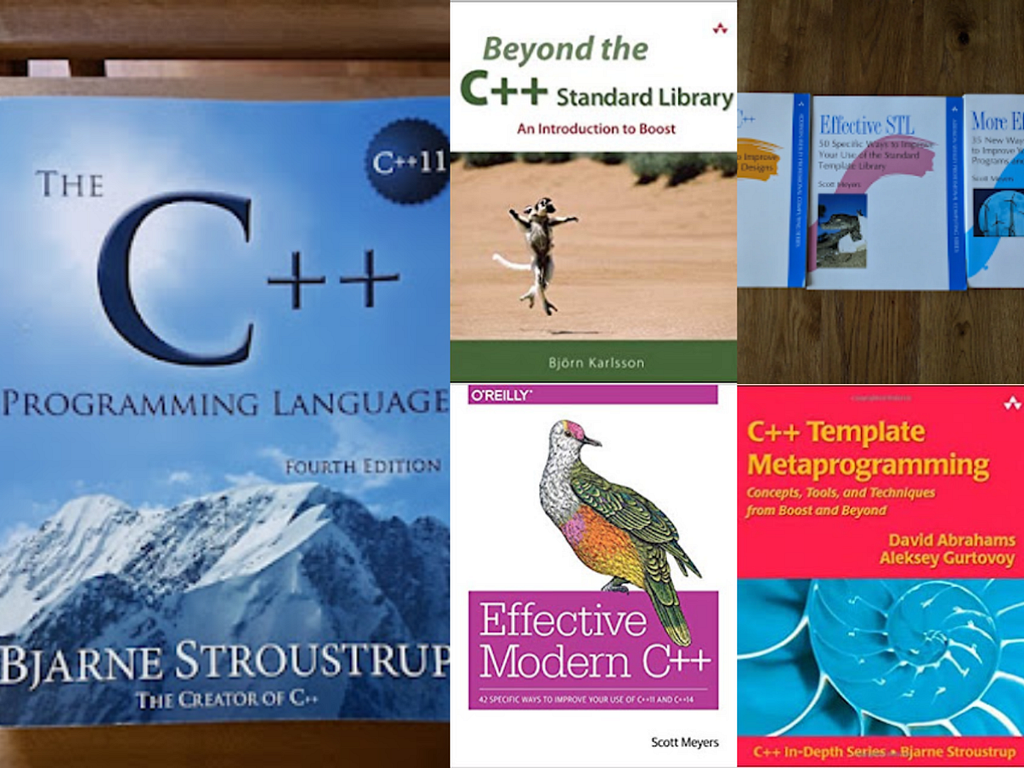
Like many folks of my generation, I started my programming career with C and C++ before moving to Java, and I’ve been writing C++ code for over 11 years.
Not daily — Java has been my primary language for most of that time — but I’ve worked on projects where both languages are used, maintained C++ codebases professionally, and built enough with Boost and STL to have a genuine sense of what it feels like to write C++ the right way.
Over those years, I’ve read, skimmed, and referenced more C++ books than I can easily count. Most are forgettable. A handful changed how I think about the language.
Here are the five I’d actually recommend — plus one addition that wasn’t in my original stack but has become essential reading for anyone working with modern C++.
💡 Note for visual learners: Books are indispensable for C++ depth, but combining them with active coding practice accelerates learning significantly. Beginning C++ Programming — From Beginner to Beyond on Udemy is the best complement to any book on this list for anyone who learns better by doing alongside reading.
Beginning C++ Programming – From Beginner to Beyond
A Note on C++ Before the Books
If you’re coming from Java or Python and think C++ is “just C with classes,” I’ll warn you now: it isn’t.
C++ is one of the most complex programming languages in mainstream use, and it genuinely cannot be mastered without consistent daily practice.
The language rewards serious investment in a way few others do — but that investment starts with choosing the right books to learn from, because the wrong books will either overwhelm you or teach you habits that professional C++ developers spend years unlearning.
These five (plus one) are the right books.
My Top 5 C++ Books — Plus One Essential Addition
Without any further ado, here are the top C++ books developers can read to learn C++ better and become a C++ expert, every company wants to hire.
1. The C++ Programming Language (4th Edition) by Bjarne Stroustrup
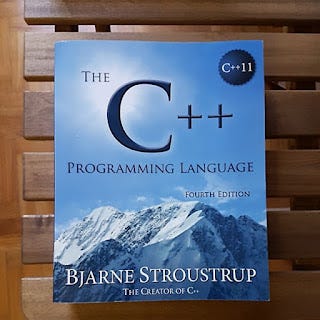
There is no more authoritative C++ book than this one. Bjarne Stroustrup created C++, and this 4th edition — updated to cover the C++11 standard — reflects a deep, first-principles understanding of why the language is designed the way it is, not just how to use it.
This is the book I keep returning to. Not to read cover to cover (it’s massive), but as a reference and a source of genuine insight into the language’s design philosophy.
When I encounter a C++ pattern that seems counterintuitive, this book usually explains the reasoning behind it in a way that makes everything click.
The 4th edition is significantly reorganized from earlier versions — broken into smaller, more navigable chapters — and covers C++11 comprehensively enough that the new standard library becomes genuinely accessible. If you’ve been using Boost for functionality that C++11 now provides natively, this book is what helps you make that transition.
It also teaches good programming broadly, not just C++ specifically. The sections on design, abstraction, and code organization are worth reading even if you never write another line of C++.
Pair it with: C++ Fundamentals including C++ 17 by Kate Gregory on Pluralsight for modern C++ 17 features that go beyond what the 4th edition covers.
Best for: Serious C++ developers who want the authoritative reference, anyone who wants to understand why C++ works the way it does
Here is the link to Get The C++ Programming Language
The C++ Programming Language, 4th Edition
2. Effective C++ & More Effective C++ by Scott Meyers
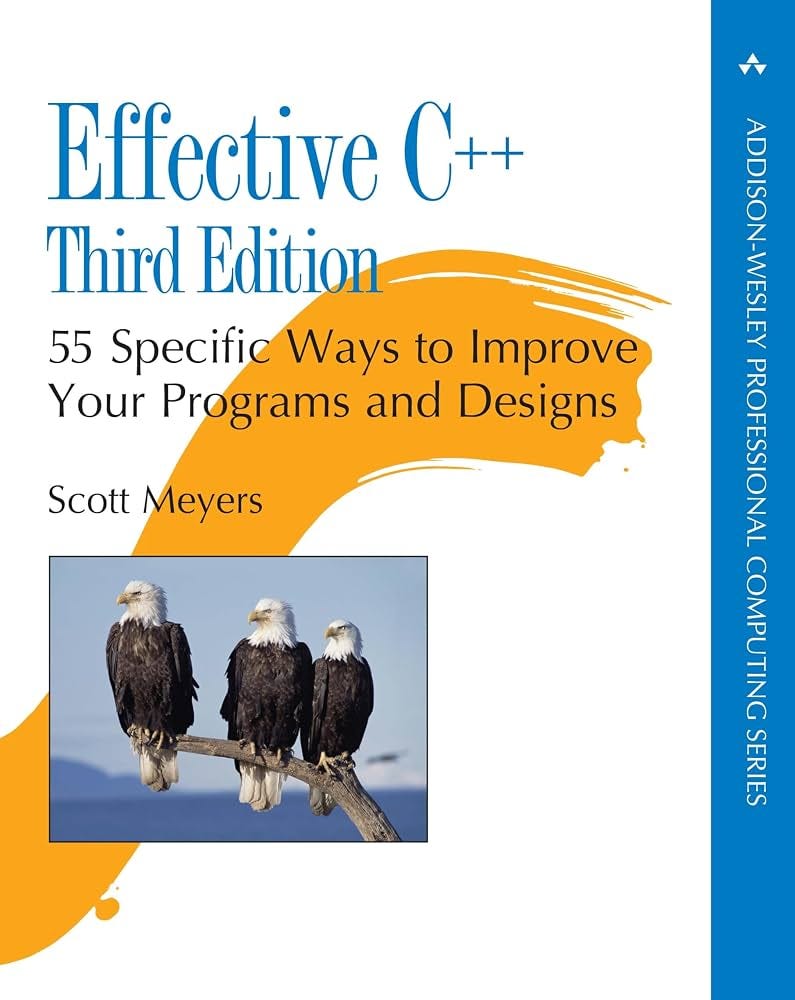
Scott Meyers occupies the same position in C++ literature that Joshua Bloch does in Java — the person who most clearly articulates the right way to use the language. I read Effective C++ after reading Effective Java, and the experience was just as valuable.
The 3rd edition of Effective C++ contains 55 specific, actionable guidelines for improving your C++ programs and designs. These aren’t vague principles — each item is a concrete recommendation with a clear explanation of why it matters and what goes wrong when you ignore it.
The items cover resource management, inheritance, templates, exception safety, and the subtle behaviors that trip up even experienced C++ developers.
More Effective C++ extends this with another 35 items covering more advanced topics. Together, these two books are the definitive guide to writing C++ that’s correct, efficient, and maintainable.
If you’re coming from C or Java and learning C++ for professional work, this collection is the book I’d want you to read second, right after Stroustrup’s introduction.
Best for: Programmers transitioning from other languages into C++, developers who want to move from “C++ that works” to “C++ that’s correct and idiomatic”
Here is the link to Get Effective C++ & More Effective C++ (Digital Collection)
Effective C++ Digital Collection: 140 Ways to Improve Your Programming
3. Effective Modern C++ by Scott Meyers
Another essential from Scott Meyers — and the book that makes the transition from C++03 to C++11/14 actually make sense.
C++11 was not a minor update. It fundamentally changed how C++ should be written — move semantics, smart pointers, lambda expressions, range-based for loops, constexpr, rvalue references, and more.
Effective Modern C++ is the book that explains not just what these features are, but when to use them, why they were designed that way, and the subtle pitfalls that await developers who use them incorrectly.
I’d describe this book as required reading for any C++ developer who learned the language before 2011 and is now working on codebases that use modern C++. The gap between C++03 habits and C++11 best practices is wider than most people realize, and this book closes it systematically.
Pair it with: C++ Standard Library including C++14 & C++17 by Rainer Grimm on Educative for interactive coverage of the standard library that complements the best practices in this book.
Best for: C++ developers updating their skills from older standards, anyone working on codebases that mix pre-modern and modern C++
Here is the link to Get Effective Modern C++
Effective Modern C++: 42 Specific Ways to Improve Your Use of C++11 and C++14
4. Beyond the C++ Standard Library: An Introduction to Boost
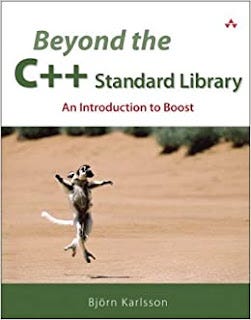
Boost is the C++ developer’s equivalent of what JDK provides Java developers — a comprehensive library of high-quality, peer-reviewed components covering everything from smart pointers to networking to regular expressions to graph algorithms.
The key difference is that many Boost components later become part of the C++ standard, which means understanding Boost gives you early access to the direction the language is heading.
This book is the best introduction to Boost available. It explains not just how to use the core Boost libraries but why they exist — what problem each one solves and how it solves it more elegantly than the alternatives.
For professional C++ developers working on production codebases, Boost familiarity is genuinely expected, and this book is how you get there.
Note: while the C++ standard library has incorporated many formerly Boost-only features in C++11 and beyond, Boost still provides substantial value and remains widely used in professional projects. This book gives you the conceptual foundation to use both effectively.
Pair it with: Learn Advanced C++ Programming by John Purcell on Udemy, which covers STL alongside modern C++ concepts including C++11 lambda expressions.
Best for: Intermediate to experienced C++ developers working in professional environments, anyone building C++ applications that need more than the standard library provides
Here is the link to Get Beyond the C++ Standard Library: An Introduction to Boost
Beyond the C++ Standard Library: An Introduction to Boost
5. C++ Template Metaprogramming by David Abrahams & Aleksey Gurtovoy
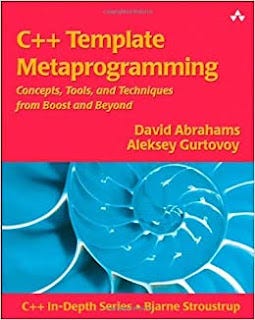
This is not a beginner book. I want to be clear about that upfront. This is a book for C++ developers who are ready to go deep into one of the most powerful and least understood features of the language.
Template metaprogramming is the technique of writing C++ code that executes at compile time — using templates to perform computations, enforce constraints, and generate specialized code before a single instruction runs.
It’s how the Boost Metaprogramming Library works, it’s how many high-performance C++ libraries achieve their efficiency, and it’s a subject that the vast majority of C++ developers have never seriously engaged with.
This book, part of the C++ In-Depth Series, explains the basics of template programming clearly and then walks through the Boost MPL library with extensive examples. The coverage of metaprogramming concepts is detailed enough to genuinely change how you think about what C++ templates can do.
If you want to understand how professional C++ library code actually works — the kind of code in Boost and the standard library itself — this is the book that opens that door.
Pair it with: The free Beginner C++ Template course on Udemy as a gentler introduction before diving into the metaprogramming depth this book provides.
Best for: Experienced C++ developers ready to go deep, library authors and engineers working on performance-critical C++ systems
Here is the link to — Get C++ Template Metaprogramming
Bonus: A Tour of C++ (3rd Edition) by Bjarne Stroustrup
I’m adding this one because it didn’t exist when I first built my C++ library and I wish it had. Stroustrup’s A Tour of C++ is a concise, modern overview of the entire language — deliberately brief (~240 pages) but comprehensive enough to give an experienced programmer a complete picture of what modern C++ looks like.
Where The C++ Programming Language is the authoritative deep reference, A Tour of C++ is the fast orientation. It covers C++20 features including concepts, ranges, coroutines, and modules — things that represent the current state of the language and that none of the other books on this list address.
If you’re a developer from another language who wants to quickly understand the shape of modern C++ before diving into the deeper books, this is where to start. It’s also a great companion to Effective Modern C++ for understanding what new features exist before learning the best practices for using them.
Best for: Experienced programmers getting their first exposure to C++, developers who want a current overview of C++20 features, anyone wanting a fast orientation before committing to the heavier books
Here is the link to Get A Tour of C++ (3rd Edition)
Tour of C++, A (C++ In-Depth Series)
Recommended Reading Order
If you’re new to C++:
- A Tour of C++ — get the shape of the language fast
- The C++ Programming Language — go deep on the foundations
- Effective C++ — learn to write it correctly
If you’re an intermediate C++ developer updating to modern C++:
- Effective Modern C++ — the C++11/14 transition guide
- A Tour of C++ — see what C++17/20 added
- Beyond the C++ Standard Library — master Boost
If you’re an experienced developer aiming for expert-level:
- Effective Modern C++ — if you haven’t already
- Beyond the C++ Standard Library — professional-grade library knowledge
- C++ Template Metaprogramming — the advanced frontier
Final Word
That’s all about the 5 best C++ books for developers. C++ is genuinely difficult to master — more so than most programming languages, because the same flexibility that makes it powerful also makes it easy to write code that’s subtly wrong, inefficient, or both.
The books above are the ones that develop not just C++ knowledge but C++ judgment — the ability to make good decisions about which features to use, when to use them, and what the consequences are.
Read them in order. Code constantly alongside them. And accept that mastery is a long game — C++ rewards the developers who never stop studying it.
P.S. — If the books feel heavy going at the start, combine them with Beginning C++ Programming — From Beginner to Beyond on Udemy. The course provides the active, visual learning experience that makes the conceptual material in the books land faster. Books build depth; hands-on coding makes that depth stick.
Beginning C++ Programming – From Beginner to Beyond

I’ve Read 20+ C++ Books: Here Are My Top 5 Recommendations was originally published in Javarevisited on Medium, where people are continuing the conversation by highlighting and responding to this story.
This post first appeared on Read More