
ByteByteGo or Hello Interview? Which one are you using for coding interview preparation in 2026?
If you’re preparing for System Design Interviews in 2026, chances are you’ve heard about two platforms again and again:
- Hello Interview
- ByteByteGo
And honestly?
Both are excellent.
But they solve different problems.
After reading countless reviews, Reddit discussions, interview experiences, and trying both platforms myself, here’s my honest breakdown of:
Hello Interview vs ByteByteGo — which one is actually better for System Design Interview prep in 2026?
Why System Design Interviews Feel Harder in 2026?
A few years ago, most companies focused heavily on:
- LeetCode
- DSA
- coding rounds
Now?
Many companies expect candidates to:
- design scalable systems
- explain trade-offs
- reason about architecture
- discuss reliability and scaling
As one Reddit user perfectly said:
“It’s like you either know how to build systems or don’t.”
And honestly…
That’s very accurate.
Modern interviews are increasingly testing:
- real engineering thinking
- architecture reasoning
- scalability knowledge
- communication skills
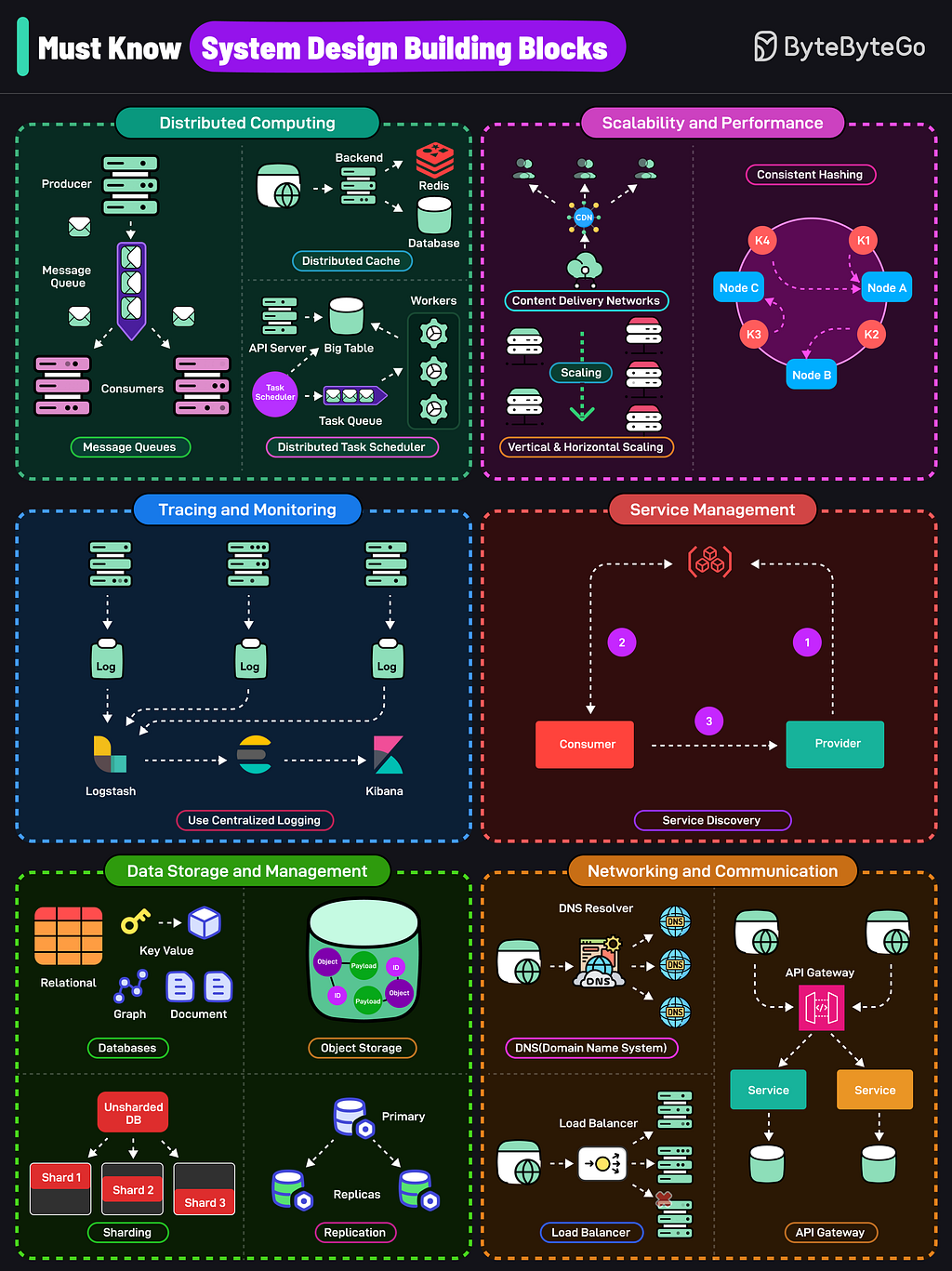
Not just memorized answers. That’s why its important for any developer to have solid understanding of System Design fundamentals, software architecture and tradeoffs and ByteByteGo is my favorite platform here for their visual diagram.
They make you understand System Design fundamentals quickly and in depth. Here is one such example:
What Makes Hello Interview Popular?
Recently, Hello Interview has exploded in popularity among engineers preparing for FAANG-style interviews.
One Reddit user even called it:
“The cheat code to acing interviews now.”
And I understand why.
The platform focuses heavily on:
- structured system design preparation
- AI-assisted whiteboarding
- interview frameworks
- guided design practice
What I Like About Hello Interview?
Here are the main things I really liked about Hello Interview:
1. Excellent Framework for Answering System Design Questions
One thing many developers struggle with is:
“Where do I even start?”
Hello Interview helps candidates structure answers better:
- functional requirements
- non-functional requirements
- scaling concerns
- trade-offs
- architecture flow
This is extremely valuable.
Because many candidates fail not due to lack of knowledge…
But because their thinking feels unstructured during interviews.
2. AI-Assisted Practice is Surprisingly Useful
Their AI-assisted whiteboarding feature is actually pretty interesting.
You can practice:
- system design
- architecture discussions
- requirement gathering
And get feedback while solving problems.
For beginners and mid-level engineers, this can genuinely help build confidence.
3. Great for Mock Interview Simulation
A lot of users mentioned this:
The platform helps simulate interview pressure better than just reading theory.
That matters.
Because system design interviews are not only about architecture.
They’re also about:
- communication
- confidence
- clarification questions
- driving discussions
The Biggest Limitation of Hello Interview
Now let’s talk honestly.
Several experienced engineers pointed out something important:
👉 The AI can become “spoon-feedy.”
Meaning:
- it guides too much
- hints too early
- validates too quickly
Real interviews are harder.
Real interviewers:
- challenge assumptions
- push trade-offs
- ask uncomfortable questions
- disagree intentionally
And for senior/staff-level interviews, this difference matters a lot.
“The AI tutor cannot be used for staff/principal level mocks.”
I think that’s fair criticism.
Where ByteByteGo Shines?
Now let’s talk about ByteByteGo.
If Hello Interview is strong for:
- interview simulation
- guided practice
- frameworks
Then ByteByteGois exceptional for:
- fundamentals
- architecture understanding
- visual learning
- real system breakdowns
And honestly?
I think this is where many engineers should start first.
System Design · Coding · Behavioral · Machine Learning Interviews
Why I Personally Like ByteByteGo More for Learning
The biggest strength of ByteByteGo is this:
👉 It teaches how systems actually work.
Instead of memorizing interview answers, you learn:
- scalability patterns
- distributed systems
- database trade-offs
- caching
- queues
- replication
- architecture patterns
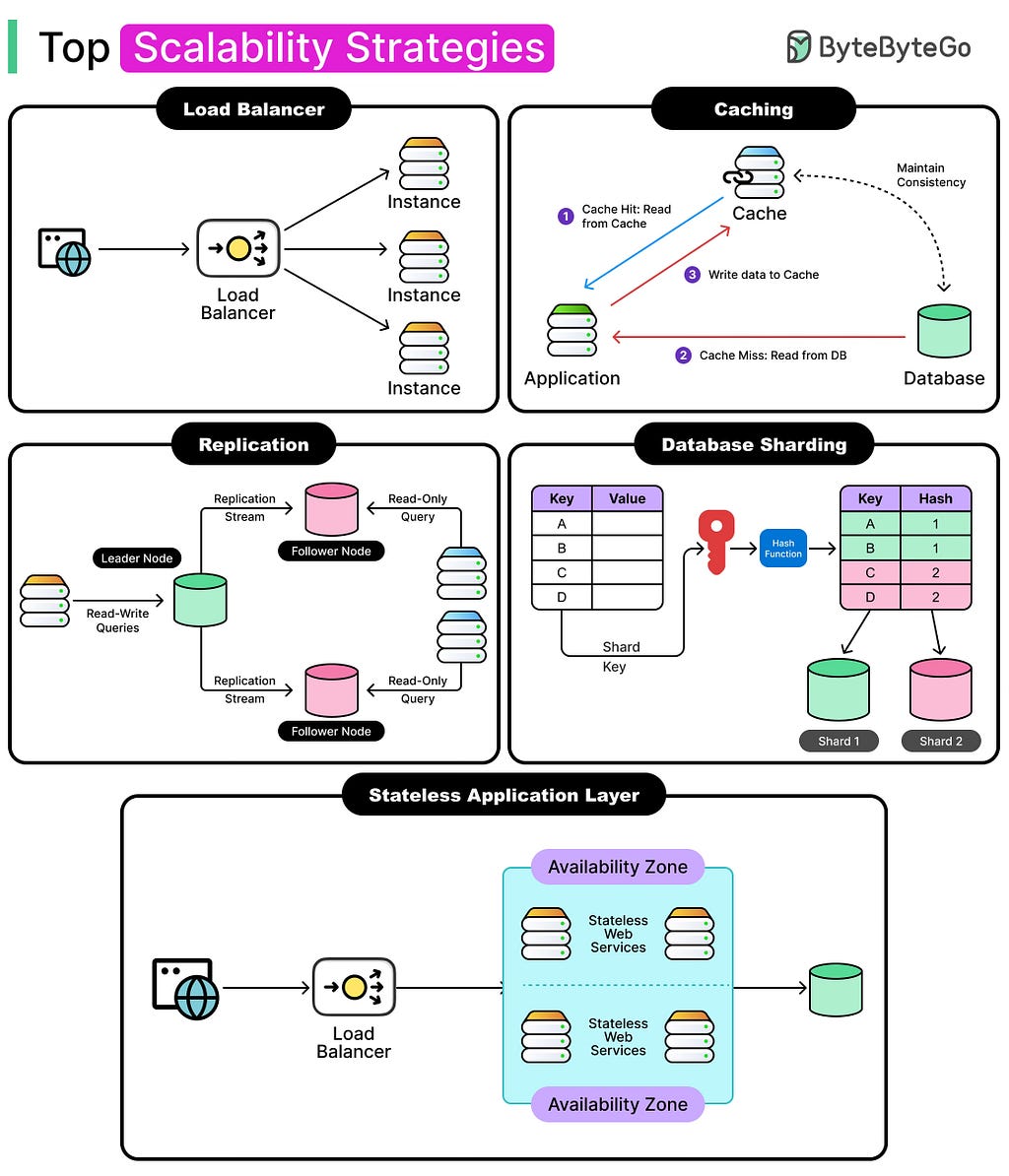
Which is exactly what strong interviewers test. Here is a quick guide of various Scalability strategies from ByteByteGo in a nice visual format:
The Content Quality is Extremely High
One reason ByteByteGo became so popular is because Alex Xu, founder of ByteByteGo and author of popular System Design Interview — An insider’s guide book, explains difficult concepts in a very simple and visual way.
The platform includes:
- diagrams
- architecture walkthroughs
- real-world systems
- practical trade-offs
And this helps a LOT during interviews. If you haven’t read this System Design Interview book, I highly recommend you to read them as well, they are very well structured and perfect for System Design interview preparation.
My Favorite ByteByteGo Resources
ByteByteGo is a collection of resources, they not just cover System Design but also coding patterns, Generative AI System Design, ML System Design, and Behavioral interviews.
Here are my favorite courses from ByteByteGo website for System Design interview and coding interviews in general.
1. System Design Fundamentals
The biggest interview mistake candidates make:
❌ Jumping into complex designs without fundamentals.
ByteByteGo helps fix that.
Their content on:
- caching
- load balancing
- sharding
- queues
- rate limiting
- replication
is genuinely excellent.
👉 You can explore it here: ByteByteGo
System Design · Coding · Behavioral · Machine Learning Interviews
2. Coding Patterns
This is underrated.
A lot of companies combine:
- coding
- system design
- practical problem solving
ByteByteGo’s coding patterns section is excellent for strengthening interview problem-solving:
3. Generative AI System Design
This is incredibly relevant in 2026.
More companies are now asking:
- AI infrastructure questions
- RAG architecture
- vector database design
- LLM system scaling
ByteByteGo already has dedicated content for this:
👉 Generative AI System Design Interview
This is honestly one of the most future-proof parts of the platform.
4. Machine Learning System Design
Another huge advantage.
Very few interview prep platforms properly cover ML system design.
ByteByteGo does.
For example:
👉 Machine Learning System Design
And their:
👉 Video Recommendation System
is especially good.
ByteByteGo Also Covers OOD Interviews
A lot of engineers ignore Object-Oriented Design interviews.
That’s a mistake.
ByteByteGo has dedicated resources for:
- Parking Lot Design
- OOD fundamentals
- object-oriented analysis
Examples:
👉 Object Oriented Analysis and Design
The Books Are Also Fantastic
If you prefer books, Alex Xu’s system design books are still among the best resources available.
Some excellent ones include:
- System Design Interview — An Insider’s Guide
- System Design Interview — An Insider’s Guide: Volume 2
- Machine Learning System Design Interview
- Generative AI System Design Interview
- Object Oriented Design Interview: An Insider’s Guide
So… Which One is Better?
Here’s my honest take:
Choose Hello Interview if:
- you struggle with interview communication
- you want guided practice
- you need mock-style preparation
- you want AI-assisted interview simulation
Choose ByteByteGo if:
- you want deep fundamentals
- you want to truly understand systems
- you are preparing long-term
- you target senior/staff roles
- you want ML/AI system design prep
Their visual guide is just awesome for anyone who want to learn System Design in depth.
My Recommendation
Honestly?
The best combination is:
👉 Learn fundamentals from ByteByteGo
👉 Practice interviews using Hello Interview
That combination is extremely powerful.
Because system design success comes from:
- Strong fundamentals
- Clear communication
You need both.
Final Verdict
That’s all about ByteByteGo vs Hello Interview for System Design Interview Prep in 20226. If I had to recommend just ONE platform for most engineers in 2026…
I would probably lean toward: 👉 ByteByteGo
because strong fundamentals compound over time.
And ByteByteGo does an exceptional job teaching:
- scalability
- architecture
- distributed systems
- trade-offs
Which are the real foundations behind great system design interviews.
You can also check their pricing here: ByteByteGo Pricing
And honestly, if you are serious about system design interviews in 2026…
Investing in strong fundamentals is probably the highest ROI thing you can do.
P. S. — If you want to just one thing I suggest go ahead and join ByteByteGo. They are now offering 50% discount on their lifetime plan which provides best value. I have got that one and recommend the same because you will always need it whenever you want to make a switch.
System Design · Coding · Behavioral · Machine Learning Interviews

Hello Interview vs ByteByteGo — Which Is Better for System Design Interview Prep in 2026? was originally published in Javarevisited on Medium, where people are continuing the conversation by highlighting and responding to this story.
This post first appeared on Read More